 Skip to content


The Role of Investment Consultants in Structuring Your Pitch
9th June 2025
Raising investment isn’t just about having a great idea. Investors don’t fund ideas – they fund businesses and more importantly, they back the right people. That means your pitch has to do more than just impress. It has to convince. It has to feel like a sure thing. And that’s where many founders struggle.
Entrepreneurs are visionaries, and visionaries don’t always speak the same language as investors. Founders talk about opportunity, while investors obsess over risk. Founders describe their ambitions, while investors focus on financial returns. The disconnect is real – and costly.
As Robot Mascot’s James Church explains in his bestselling book, Investible Entrepreneur: “Too many brilliant business ideas are killed by poor communication, leaving investors unable to understand the very basics of the business. When it comes to pitching, clarity is key.”
That’s why the best founders don’t do it alone. They bring in investment consultants – experts who know exactly how to shape a pitch so that it speaks directly to what investors need to hear.

Why most founders fail at pitching
It’s not a lack of passion. It’s not even a lack of strategy. Most pitches fail because they lack structure. They ramble, they overcomplicate, they drown in jargon. Or worse – they assume that enthusiasm is enough to make an investor take a leap of faith.

The truth? Investors don’t take leaps of faith. They take calculated risks. And they expect founders to do the same.
That means being clear about how the business will grow, what milestones will be hit, how the investment will be used and when investors will see their return. It means having a narrative that’s not just exciting but credible – something that stands up to scrutiny.
Investment consultants help founders refine their message, sharpen their story and remove the fluff. They turn good pitches into irresistible ones.
As James says: “Great ideas don’t raise investment, a great pitch does.”
Breaking down the investment pitch
A pitch isn’t just a PowerPoint deck. It’s a structured argument, a case built on logic, evidence and persuasion. And it needs to be tailored for different stages of the investment process.
The teaser pitch
Think of this as the hook. It’s not about closing the deal – it’s about opening the door. A teaser pitch is often a stripped-back version of the full pitch deck, designed to grab interest fast. It highlights the opportunity, the market potential and why now is the time to invest.
Investment consultants ensure that this teaser contains just enough to intrigue but not so much that it overwhelms. They shape it to generate curiosity – the kind that makes investors lean in and ask for more.
SERVICE: Develop Your Startup One-Pager
The investor pitch deck
This is where the detail comes in. A well-structured pitch deck follows a clear flow – problem, solution, market opportunity, traction, business model, financials and the ask. But it’s not just about including the right sections. It’s about how those sections interact, how they build momentum, how they drive home the investment case.
Many founders make the mistake of packing their decks with too much detail, creating a wall of information that’s hard to process. Others go the opposite way, leaving investors with more questions than answers.
Investment consultants know where to strike the balance. They bring clarity to complexity, ensuring that every slide serves a purpose. They make sure investors don’t just see potential – they see a business that’s ready to scale. Data from our investor outreach services show that pitch decks created by Robot Mascot investment consultants receive 2.5x more engagement per slide, with 6x as many investors viewing the full deck from start to finish.
James says: “I’ll often see a pitch refer to something in slide one or two that isn’t fully explained until perhaps slide ten of the pitch. While reading slide two, investors have no idea what is being referred to – because they haven’t seen slide ten yet. You do, it’s your business. But the investor may know nothing of your business yet. When they get to slide ten, they may well join the dots and make the connection. You can get away with something like this if it happens just once or twice. The investor can make the connections and keep up. It’s annoying, it won’t help your cause, but they do manage. However, what I see on a daily basis are pitch decks that have this occurring multiple times throughout a pitch. There’s constant back and forth and it’s impossible to keep up and take it all in.”
SERVICE: Investor Pitch Services
The financial projections
Here’s where most pitches fall apart. Financials aren’t just numbers – they’re a story about the future. And investors can tell, within seconds, whether that story makes sense.
“It’s very difficult for founders to create the business plan. I absolutely get it. On one hand, investors like myself want you to be realistic, on the other we want you to show us an exciting business opportunity. Balancing those two things is a very difficult task for founders to get right,” says Jason Warren, investment manager, Mercia
Over-optimistic forecasts raise red flags. Under-developed models suggest a lack of preparation. And vague projections? They’re an instant deal-breaker.
Investment consultants work with founders to build credible financial models – ones that don’t just impress but stand up to scrutiny. They help forecast revenues, map out burn rates and ensure that investment asks align with business milestones.
Because nothing kills a pitch faster than numbers that don’t add up.
SERVICE: Financial Projections Service
Why investor targeting is as important as pitch structure
A great pitch in front of the wrong investor is a wasted opportunity. Yet many founders take a scattergun approach, pitching to anyone and everyone, hoping that something will stick. It’s inefficient, exhausting and – more often than not – fruitless.
“If you know who your investors are and what language they use, then your job becomes much easier. There’s more money in the market than there are good ideas. They’re just looking for a credible place to put it,” says Tony Pauley

Investment consultants help founders focus their efforts, identifying investors who are the right fit. Angels, venture capitalists, family offices – each has different risk appetites, different expectations and different ways of assessing opportunities.
A pitch needs to be tailored accordingly. What works for a high-net-worth individual looking for early-stage opportunities won’t resonate with a venture fund looking for businesses with proven traction.
Investment consultants understand these nuances. They help founders navigate the landscape, ensuring that pitches land with the investors most likely to back them.
READ: The Importance of a Bulletproof Fundraising Strategy
The hidden value of investment consultants
It’s easy to think of investment consultants as just pitch deck advisors. But their role runs deeper.
“Founders are too close to their business to see it the way everyone else does,” explains James. “When you’re on the inside looking out, it seems blindingly obvious what you do and why you do it. An investor, however, is on the outside looking in.”
As such, consultants bring a level of detachment that founders often lack. When you’re too close to your own business, it’s hard to see its weaknesses. It’s hard to step back and ask the tough questions investors will ask.
Consultants act as a second pair of eyes – objective, experienced and ruthless when needed. They highlight gaps, challenge assumptions and push founders to be better prepared.
And they help founders avoid the pitfalls that sink so many investment rounds – unclear messaging, unrealistic valuations and failing to address risk.
SERVICE: Business Strategy Consulting For Startups
When to bring in an investment consultant
Some founders wait until they’ve already struggled to raise funding before seeking help. That’s a mistake. By the time investors have dismissed a pitch, it’s often too late to undo the damage.
“When you have the formula for becoming an investable entrepreneur, when you have the methodology for creating the perfect pitch, this feeling, this success, becomes so easily repeated,” says James. “Time and again you can raise investment, close deals and build brilliant businesses.”

The best time to bring in an investment consultant is before you start pitching. Before you send that first deck. Before you book that first meeting.
Because a well-structured pitch doesn’t just increase your chances of raising investment. It shapes the kind of investment you secure – how much, on what terms and from whom.
A strong pitch doesn’t just get you money, it gets you the right money, from the right investors, on the right terms.
And that can make all the difference.
READ NEXT: How To Structure A Pitch Deck

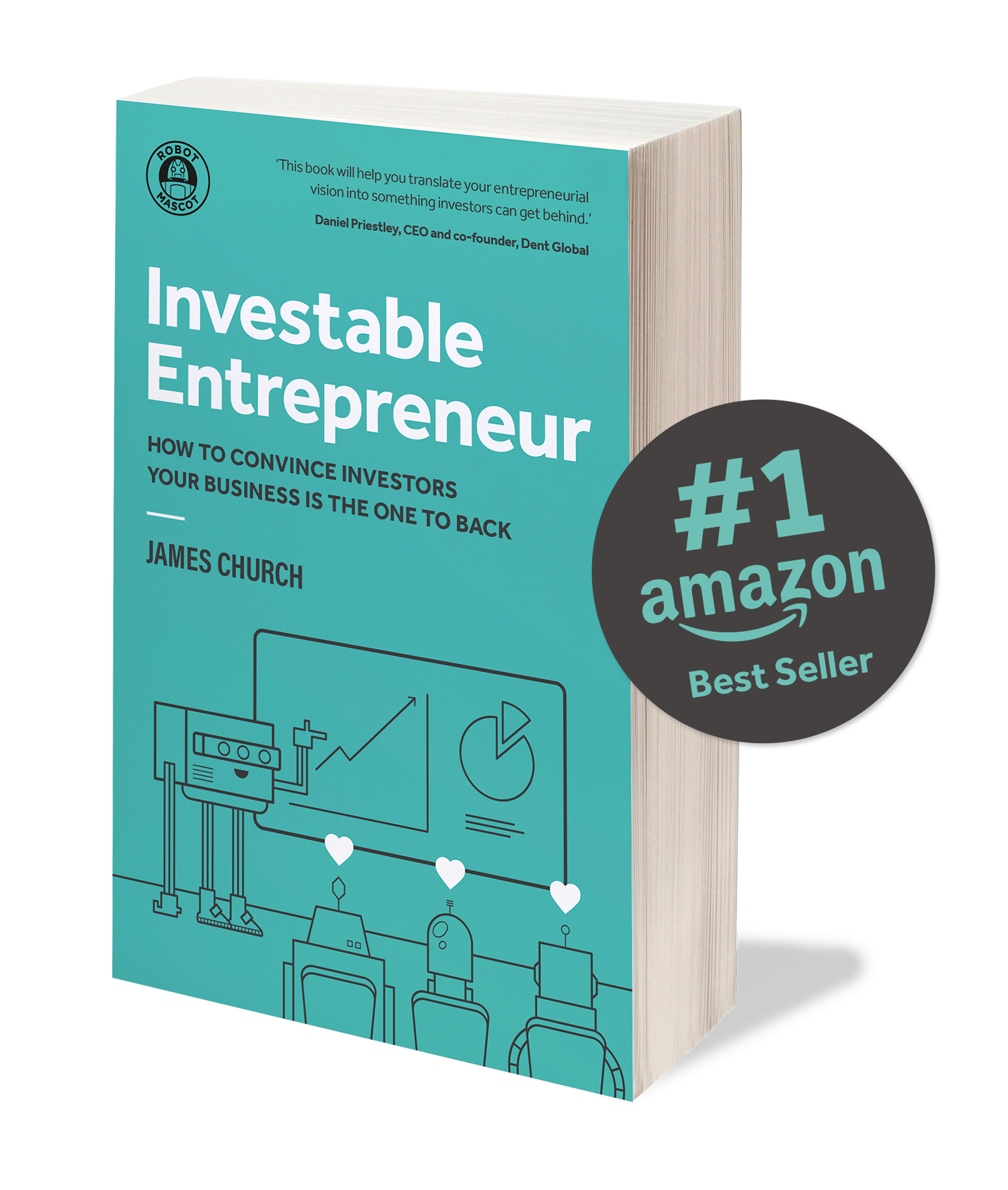
Claim your Free Copy of Investable Entrepreneur
Investable Entrepreneur takes you through our winning methodology – the process we use to increase our client’s chances of raising investment by more than 30x.
“This book will help you translate your entrepreneurial vision into something investors can get behind.”
Daniel Priestley, CEO and founder, Dent Global and four times best-selling business author
Recent Posts


Keep up to date with what we’re up to via email





Copyright ©Robot Mascot Ltd. All rights reserved.
