 Skip to content


Pitch Like a Pro: How Storytelling Turns Slides Into Funding (Case Study)
3rd July 2025
Bancone isn’t just another Italian eaterie – it’s a phenomenon. This award-winning pasta restaurant transformed from a single Covent Garden site into a burgeoning mini-empire, thanks in large part to a pitch deck that overfunded its £700k Crowdcube target by 126%, netting £880k in investment.
That funding paved the way for Bancone to triple its number of restaurants, proving how a well-crafted investment deck can fuel real growth.
Nicolas Ruston is the founder of Robot Mascot, the pitch agency behind Bancone’s investment deck. Here, he shares how his team cooked up a pitch that helped the award-winning pasta brand smash its Crowdcube target. In this deep dive, Nicolas takes us through the storytelling and design philosophy behind the deck, the slide-by-slide strategy and sequencing, and the psychological techniques that drew in nearly 900 investors – while filtering out those who weren’t the right fit. By the end, you’ll have a clear understanding of what makes a pitch deck truly investable – and the expertise it takes to create one.
Don’t forget, you can read the full Bancone case study here.
The challenge – turning pasta into an investment story

Bancone already had the magic – Michelin-quality pasta at casual dining prices, all served up in these buzzing, beautiful spaces that people loved to be in. Londoners were queueing for that silky handkerchief pasta long before investors ever saw a pitch. But here’s the thing: turning that love and energy into something an investor could back – that was the challenge.
The founders weren’t just looking for cash. They were looking to build a community – people who believed in the vision and could support them to scale without losing what made it special. So the question for us was: how do we take all that passion and proof, and wrap it into something that satisfies both the head and the heart? How do you make an investor feel it and trust it?
Our job at Robot Mascot was to bottle that essence – that handmade pasta theatre that had diners hooked – and translate it into a story that made commercial sense. We had to show: yes, this works. Yes, it can scale. And yes, it’s worth betting on.
We approached it like a film. Every slide was a scene – with its own role in the plot. Characters, conflict, resolution – the whole arc. Design and messaging had to work hand in hand. Nothing was random. Every image, every stat, every word was chosen to say one thing: this is a category-defining brand, and this team can pull it off.
Opening with a flavourful first impression

Retail investors often skim dozens of Crowdcube pitches at lightning speed. We knew Bancone’s opening slide – the cover of the deck – had only milliseconds to grab attention. Our goal was to stop investors mid-scroll with an image and message so intriguing that they had to learn more. The title slide therefore carries a heavy load: it needed to instantly convey Bancone’s mood, quality, and value proposition, while oozing credibility and originality.
READ: How To Structure A Pitch Deck
Visual storytelling from the first slide
Rather than a plain logo on a white background, we went bold. The title slide features a striking image of Bancone’s signature dish – handkerchief pasta with walnut butter and a confit egg yolk. It’s a deliberate choice: the raw yolk signals fine dining and sets the tone. It’s not for everyone – and that’s the point. The image acts as a filter, drawing in foodies and serious investors while deterring those after something more generic. A good pitch deck doesn’t just attract the right people – it repels the wrong ones. This one did both.
We layered that visual with subtle cues of credibility. Bancone’s brand identity – from logo and colour palette to typography – worked in harmony to project calm confidence. The circular logo, echoing a wax seal, contains product keywords like “pasta, prosecco, espresso,” woven into its design. And in the bottom corner, a small but mighty Michelin Guide logo says it all. That red star lends instant trust – the culinary world’s equivalent of a personal recommendation from a world-class chef.
READ: 12 ways to build brand credibility
The hook – served upfront
To top it off, we broke a conventional rule of pitch deck design: we put a short tagline on the cover. In bold text, the title slide proclaims: ‘Michelin quality food at casual dining prices’. This is Bancone’s core hook, and we wanted it to hit investors from the first screen.
Normally, many decks might save the value proposition for later, but here it made perfect sense to deliver the whole story in one delicious bite. Desire without the pain – gourmet pasta without the high prices – is a simple, powerful promise.
In just seven words, an investor immediately gets why Bancone exists and why customers love it. This prevented the ‘head-scratcher’ moment or ‘zombie stare’ that kills interest. Instead of making viewers hunt for Bancone’s USP, we plated it for them upfront.
All these elements on a single slide – a cohesive brand palette, a tantalising photo, a Michelin stamp, the product keywords, and the one-line hook – work together to spark both emotional appetite and logical curiosity. The slide doesn’t overwhelm; it intrigues. It says ‘quality’ without saying too much. In essence, the first slide delivered a sensory teaser of Bancone’s concept, grabbing investors by the taste buds and the eyeballs at once. (At an in-person meeting, the team could have handed out samples of pasta; in a digital deck, vivid imagery had to do the job.)
If this had been an in-person pitch, Bancone could have plated up some Michelin-level deliciousness to win over investors on scent and flavour – just like our client Doughboys, who brought hot pizza into the Dragons’ Den, leaving Peter Jones and Deborah Meaden practically drooling over the opportunity. But Bancone didn’t have that face-to-face luxury, so the visuals had to work harder – and they did.
This is what our client, The Doughboys did when they pitched on Dragon’s Den.
The result? Investors could practically taste the opportunity from slide one.

Setting the scene – from kitchen to market
With appetites whetted, the next slide reassured investors that Bancone isn’t just a concept – it’s a thriving, real-world business. A high-quality photo of the restaurant interior showed chefs in action, customers dining, and the energy of a busy service. It validated the brand’s existence and invited investors into its world.
This slide did two key things:
- Built trust – Proof of a functioning, successful restaurant, not just an idea.
- Continued the story – Let viewers experience the space, atmosphere, and craft behind the food.
Instead of jumping straight to numbers, we chose to build emotional engagement through visuals, helping investors picture a future where Bancone’s success scales. Subtle brand styling (colours, fonts) and strategic image reuse across the deck reinforced consistency and identity throughout.
Proving the concept with traction and praise
With the brand and setting established, the next slide addressed the question every investor asks: “How’s the business actually performing?” This traction slide was designed to validate Bancone’s model with clear, compelling metrics.
We highlighted that Bancone was already operating two successful central London locations, generating £3.8 million in revenue over nine months, with a 76% gross food margin and positive EBITDA. In a market where many startups are still burning cash, Bancone was already in profit – a key point of reassurance.
To show momentum, we included a simple visual indicating ~6% sales growth, even in a challenging environment. And we continued the food narrative by pairing these stats with an image of pasta being made – a subtle reminder of the craft behind the numbers.
By combining data with design, we made sure the message was clear at a glance: the model works, the margins are strong, and customers love it. Whether you’re an investor who leans on story or one who needs the numbers, this slide delivered both.
Serving the gap – dramatising the market opportunity

With Bancone’s current success established, the next slide addressed the forward-looking question: Where does it go from here? This is where we introduced the market opportunity – the clear gap Bancone is poised to fill.
The slide delivered a simple, powerful message: Britain loves casual dining, but quality pasta is hard to find. We backed this up with two complementary elements:
- A bold stat and quote showing how pasta is underserved in the UK restaurant market.
- A bar chart comparing burger vs. pasta restaurants, making the imbalance instantly clear.
This dual approach spoke to both story-led and data-driven investors. Visually and verbally, the takeaway was the same: there’s unmet demand, and Bancone is perfectly positioned to meet it.
We also struck an emotional chord, framing the opportunity as a missed moment in UK food culture. It wasn’t just a TAM slide – it was a call to action: Why shouldn’t more people have access to Michelin-quality pasta at everyday prices? This helped investors feel the potential as well as understand it.
READ: How to Conduct Market Research for Your Business Plan
The solution – Bancone’s vision and value proposition
Having highlighted the gap, the deck smoothly transitioned into how Bancone seizes that opportunity. This was our solution section – essentially Bancone’s vision for the future, building on the foundation we’d laid. We actually titled the slide ‘Seizing the Opportunity’ or simply ‘Our Vision,’ and it echoed the opening hook we’d already planted.
Key messages
Front and centre was that tagline again: ‘Michelin quality food at casual dining prices.’ By reprising the hook here, we ensured the core value proposition stayed engraved in investors’ minds. But now we expanded on it with a bit more context and key points. Beneath the headline, we listed three pillars that make Bancone’s model shine, phrased in plain, compelling terms – for example: ‘All-day dining appeal’, ‘High margins & strong unit economics’, ‘Proven replicable model.’
Each point was brief but meaningful: together they told a story that Bancone can serve a broad market (from quick lunchtime bites to leisurely dinners), while maintaining enviable financial performance, and that it’s not a one-hit wonder – the concept works in multiple locations. Essentially, Bancone is the right answer to the problem, and we can scale it up.
Visuals
Visually, this solution slide was a feast for the eyes as well as the mind. On one side, we placed another gorgeous food photo – this time showing a fully plated dish in its glory. (If the hook slide had a raw egg yolk, here we might show the finished dish or another star item like a creamy burrata appetizer, to convey comfort and indulgence.) We once again see our ‘characters’: the Bancone brand elements framing the left side, and the Michelin-star-worthy food imagery on the right.
The layout maintained that balanced, grid-based aesthetic so nothing looked chaotic – a deliberate nod to Bancone’s consistency and discipline in execution. The colours, fonts, and overall vibe remained aligned with earlier slides, reinforcing a cohesive narrative.
Psychology
Psychologically, this slide aimed to spark excitement and confidence. By now, an investor has seen that Bancone is tasty, real, successful, addressing a big gap – and here we’re essentially saying, ‘We know exactly why we’re winning, and we’re going to pour fuel on the fire.’ We wanted them to think ‘Take my money already!’ because the upside feels so tangible. We even touched on Bancone’s mission in quasi-heroic terms: Bancone sees itself ‘disrupting the UK restaurant market’ and ‘leading a positive evolution’ in casual dining. In other words, Bancone isn’t just opening eateries, it’s calling investors to join a food revolution – a powerful emotional hook.
By couching the vision as almost a movement (better quality for everyday dining), we appealed to investors’ hearts as much as their wallets.
Strategic sequencing – from vision to expansion

Every great story has rising action after the big idea is revealed. In Bancone’s deck, once we established the vision and solution, we moved into the growth strategy – how Bancone planned to scale up and deliver returns. It was time to show investors the roadmap and reassure them that this wasn’t pie-in-the-sky; it was a logical next step for a proven concept.
A visual timeline of Bancone’s expansion
We presented an Expansion Plan slide to outline the next chapter for Bancone. Rather than dense text, we used a simple timeline graphic: a visual journey from the existing two sites to the imminent third site in Borough Yards (funded by this raise) and beyond.
This slide reused the photograph of the restaurant we introduced earlier, now cleverly embedded in the timeline as a landmark image. It helped remind viewers of that buzzing restaurant scene and say, ‘we’re doing it again.’
We labeled the timeline with milestones and dates: the opening of Covent Garden (site 1), the launch of their second site, and the planned opening of site 3, with arrows indicating the growth trajectory.
We kept it clean and ‘reduced’ in design – very easy to follow at a glance. The message was straightforward: Bancone has done it twice; with your investment, we’ll do it a third time (and more). It linked the past success to future expansion, reinforcing continuity and competence.
Market positioning: where Bancone stands out
To further convince investors of Bancone’s strategic thinking, we followed up with a market positioning slide. Essentially, we showed where Bancone sits in the competitive landscape and why that’s a lucrative spot. This took the form of a perceptual map (quadrant chart) mapping quality vs. price for various restaurant brands. By plotting Bancone and its competitors, we visualised that Bancone occupies a unique niche: high quality at a moderate price.
We made sure the chart wasn’t cluttered – just the key players like perhaps fast-casual chains on one end and expensive Michelin-star restaurants on the other, with Bancone clearly off in its own sweet spot. This instantly communicated to investors that Bancone isn’t running into a saturated field; it’s carving a new space. As the heading on this slide highlighted, Bancone offers a ‘new experience’ in a market full of either cheap low-quality options or great food that’s too pricey.
The inclusion of a brief headline about customer experience also reminded readers that Bancone nails the ambience and service, not just price and taste.
Reinforcing differentiation and accessibility
This sequence – expansion timeline followed by competitive map – did double duty. It gave investors a forward-looking plan (the how and where of growth) and reinforced Bancone’s differentiation. Even if, as one observer pointed out, Bancone’s menu prices are a bit higher than a typical quick-bite chain, the chart made it clear that for its quality tier Bancone is extremely accessible. We even addressed this nuance in the narrative: Bancone isn’t the cheapest pasta in town, but it’s by far the best quality at that price point. In other words, value for money is the takeaway.
The expert balance: story and data in harmony
For a startup founder reading this, note how the deck balances story and data throughout. It’s about combining storytelling with evidence. In Bancone’s deck, every emotive claim (e.g. ‘underserved market’, ‘we’re different’) was backed by a visual or number (charts, maps, stats), and vice versa, every data point was woven into the story. That’s a deliberate expert technique – you keep both the head and the heart of the investor engaged.
The dream team behind the scenes

Every investor wants to know that the people behind the business are capable of delivering on the vision. Bancone’s team slide showcased exactly that: a compact, confident presentation of the three individuals leading the charge – William Ellner, Jason Myers and David Ramsay.
Rather than overwhelming the audience with a laundry list of bios, we distilled each founder’s background into a single, powerful narrative. Together, they cover all critical bases: culinary credibility, operational excellence, and strategic leadership. Their combined experience signals a team that’s already done this successfully – and is perfectly positioned to do it again.
Visually, the slide was influenced by the elegant layout of premium recipe books. Carefully composed headshots, a consistent typographic style, and a clean aesthetic helped reinforce the brand’s sophistication and trustworthiness. The message was simple and effective: this is a seasoned, complementary team you can trust to scale a winning concept.
READ: What’s more important to investors: the idea or the team?
Showcasing the numbers – simple, transparent, and enticing
Financial projections are where many decks falter, but for Bancone we kept things straightforward and reassuring. The projections slide offered a clean, high-level view of revenue growth, profitability, and site expansion over time – just enough to get investors excited without drowning them in detail.
- High-level projections show profit and growth – Investors could see a clear upward trajectory and credible assumptions.
- Simple design reassures without overwhelming – Large, legible numbers and colour-coded visuals made it easy for any viewer to grasp the big picture at a glance.
For those who wanted to dive deeper, the slide acted as a teaser for the full business plan – signalling transparency without sacrificing clarity.
READ: How to Prepare Financial Projections for Potential Investors
The ask – wrapping the offer in a bow

By the penultimate slide, any interested investor is wondering ‘So, what are the terms and how do I get in?’. We answered that through an Investment Opportunity slide that lays out the deal in clear terms. After all the storytelling, this is where we get down to business: how much is Bancone raising, at what valuation, for how much equity, and what will the money be used for.
Making the numbers clear and accessible
We presented the fundraise details prominently – for example: ‘Raising £700,000 for X% equity at £Y valuation’ – in bullet points or a concise infogram. We also included a simple graphic illustrating Use of Funds: a pie chart or set of icons showing that the new capital would go into opening the new sites, marketing, team hires, etc. This helps investors see exactly how their money will accelerate Bancone’s growth (and that it’s not going into any black holes). Our design kept these figures very accessible; an investor shouldn’t have to dig through paragraphs to find the ask. It’s right there in bold print.
Don’t forget the endgame: showing the exit
But equally important, we addressed the investor’s return by mentioning the exit strategy. Many startups forget to talk about how investors will eventually get their money back (with multiples); we made sure Bancone’s deck wasn’t one of them. On this slide, we included a forward-looking statement about possible exit routes – perhaps ‘Targeting exit in 5 years via trade sale or private equity buyout’, or mention that similar restaurant groups have been acquired for sizable multiples. We literally framed it as ‘how the story ends – and what’s in it for you.’ By pointing to a credible exit plan, we reassured investors that there is a clear path to realise their gains. In Bancone’s case, we might have noted that expanding to multiple sites could make them an attractive acquisition target for larger hospitality groups, or even IPO if the concept grew nationally. The point is to show that we’re planning the endgame, not just the build-up.
A confident, no-fluff conclusion
The tone of the investment slide was confident and opportunity-focused. ‘Join us and here’s what you stand to gain’ is the subtext. By now, for the right investor, all the pieces have aligned: they see a great product, a market gap, a plan to scale, a trustworthy team, solid financials, and now an attractive investment offer. Our job here was to make that offer as clear and compelling as possible, visually and textually. No clutter, no last-minute surprises – just the facts that matter to make a decision.
Final flourish – inviting investors on the journey

Every story needs a good ending, and our pitch deck closed with a simple yet powerful Call to Action. The final slide – the bookend to our narrative – featured a warm invitation: ‘Join us on this journey’. We reiterated Bancone’s mission in one uplifting sentence and made it clear how to take the next step (e.g. ‘Contact us to discuss this opportunity’ or in the Crowdcube context, ‘Invest now on the platform’).
Visually, we brought back one more beauty shot – often it’s great to leave a lasting image in the reader’s mind. In Bancone’s case, we reintroduced the restaurant interior. This served to once again reinforce the brand’s atmosphere and make the investor feel the success that they’re being invited to be part of. The final slide’s design was clean and uncluttered – no more data, no more new info. Its function was to leave the reader with a resounding positive impression and a clear directive. We basically said: You’ve seen what we’re about – now come be a part of it.
This closing also subtly completes the psychological arc. Remember how we started by calling Bancone a call-to-adventure for the industry? We end by extending that call-to-adventure to the investor, in essence: do you want to be on the side of change and share in the rewards?
It’s an emotional nudge that can be very effective after a logically convincing deck. And because we designed the whole presentation to target the right kind of investor, we knew that by the end, those folks would be feeling inspired and eager. In Bancone’s case, it worked brilliantly – investors who believed in the vision piled in, resulting in an oversubscribed round and 886 people investing in the mission
The secret sauce – balancing narrative, data and design
What made Bancone’s deck sing was the balance. It wasn’t just a pretty face, and it wasn’t just a spreadsheet in disguise. It hit that sweet spot where storytelling, design and commercial credibility all came together. Our goal was simple: make investors believe – not just in the food, but in the future.
Design that does the heavy lifting
We treated this thing like an experience. Every visual choice was doing a job – whether that was creating a mood, guiding the eye, or saying, “look at the calibre here”. We kept to Bancone’s brand, but we also pushed it. We broke a few ‘rules’ where it helped the message land harder. Every slide flowed into the next like beats in a film. And we designed for how people read decks now – fast, online, probably on their phone. So everything had to land quickly: clean layout, readable text, and scroll-stopping visuals.
Tell a story, not just a sequence
There’s a real power in structure. We built the deck like a narrative – intro, challenge, resolution. That classic arc. But we also leaned on archetypes: Bancone as the challenger to the tired status quo, the team as the guides, the investor as the one who helps the hero rise. It’s not just slides – it’s a mini-movie. And that gets under the skin in a way raw facts never can. You want the investor to feel part of the journey, not just observe it from a distance.
The numbers that count
Of course, none of that means much if the numbers don’t stack up. Luckily, Bancone had the goods – revenue, margins, growth, the lot. But we were picky. We picked the right numbers. The ones that say, “this works, and here’s why.” We cut the fluff. One smart graphic beats a paragraph of waffle any day. This is the bit people forget: it’s not just what data you show – it’s how you show it.
Proof in the pasta
And it worked. Bancone smashed their Crowdcube target – 126% funded. They opened at Borough Yards, just like we said they would. They kept the margins tight and the customers coming. That deck didn’t over-promise. It set out a clear vision – and now they’re living it. And when they go back for the next raise? They’ve already got trust in the bank.
Don’t forget, you can read the full Bancone case study here.
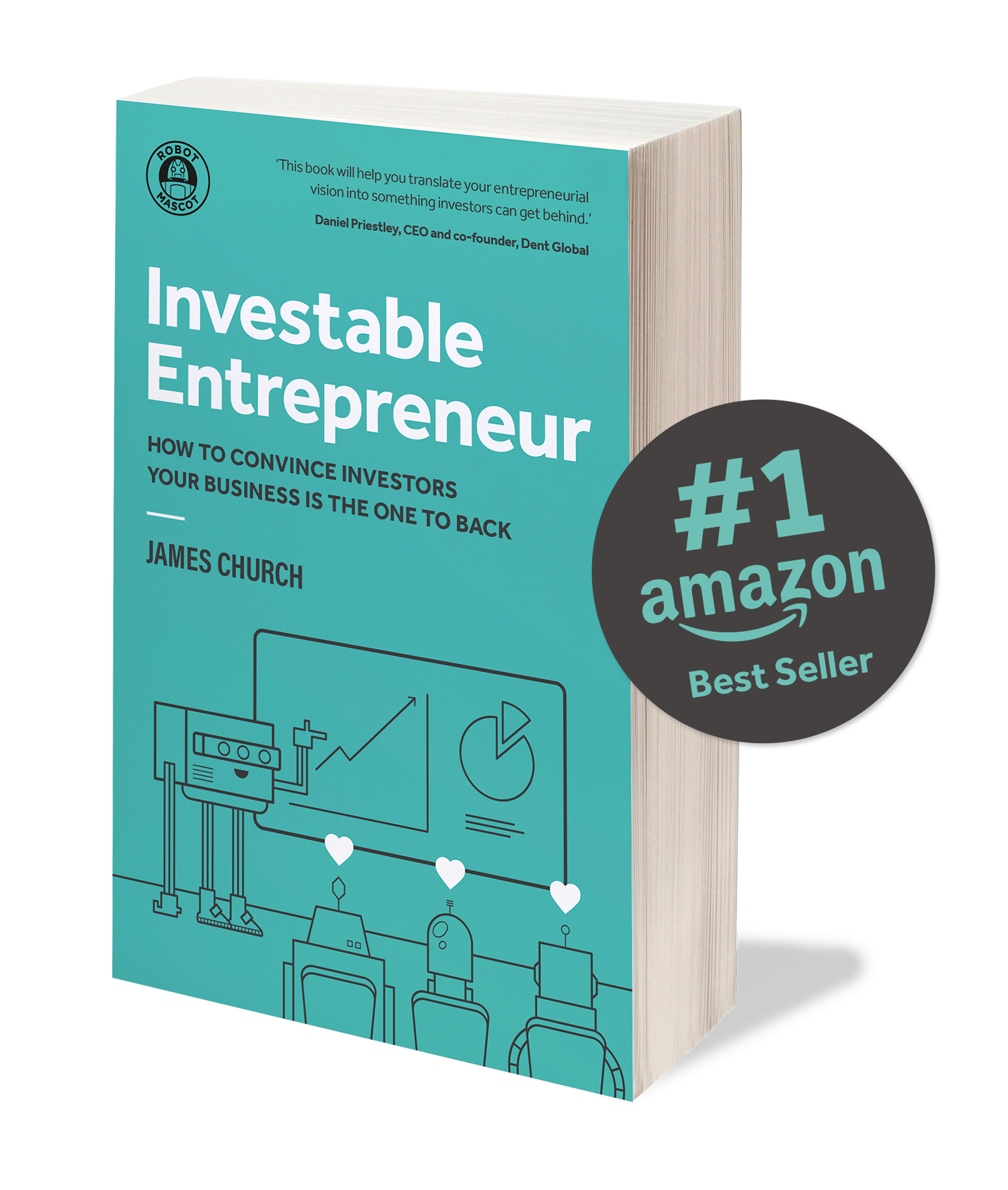
Claim your Free Copy of Investable Entrepreneur
Investable Entrepreneur takes you through our winning methodology – the process we use to increase our client’s chances of raising investment by more than 30x.
“This book will help you translate your entrepreneurial vision into something investors can get behind.”
Daniel Priestley, CEO and founder, Dent Global and four times best-selling business author
Recent Posts


Keep up to date with what we’re up to via email



Copyright ©Robot Mascot Ltd. All rights reserved.
