 Skip to content


The Four Founder Equity Journeys
2nd October 2025
Every startup founder faces a fundamental question early in their journey: How will I fund this business? And behind that question lies an even bigger one: How much of my business am I willing to give away to grow it?
The path a founder takes in answering those questions shapes not just their cap table, but the very DNA of their company. This is what we call the equity journey – the evolving relationship between ownership, funding, control and growth.
There is no one-size-fits-all approach. Some founders maintain total ownership and grow organically. Others give away equity to fuel rapid expansion. What matters most is understanding your options and making intentional decisions based on your business model, risk appetite, and long-term vision.
In this guide, we unpack the four primary equity journey models:
- Bootstrapping
- Seedstrapping
- Bootscaling
- The classic VC route

Each represents a viable path, with distinct trade-offs around speed, control, dilution, and funding readiness. By understanding these models, you can choose the one that aligns with your values and your venture.

Bootstrapping: Growth on your own terms
Bootstrapping means funding your business from your own resources: savings, personal income, early revenue. You rely on grit, lean principles and smart reinvestment to build something sustainable.
Who it’s for
- Founders with service-based or low-capital businesses
- Solo operators or small teams
- Entrepreneurs prioritising control and independence
Pros
- No equity dilution
- Full decision-making power
- Focus on building a sustainable business
Cons
- Limited growth capital
- Slower scaling
- Personal financial risk
Key requirements
- Tight financial discipline
- Revenue model that generates cash early
- Foundational assets: lean plan, basic forecast, and messaging clarity
Signs you may need to evolve
- You’ve hit a growth ceiling you can’t break without funding
- Your competitors are outpacing you due to capital injection
- You’re turning away opportunity because you lack capacity
Many founders start with bootstrapping, and some stay there indefinitely. But for those who want to grow faster without handing over the keys, there is a middle ground.
READ: What You Should Know About Bootstrapping Phase
Seedstrapping: Early funding with a lean mindset

Seedstrapping blends bootstrapping values with external support. You raise a modest round – from friends and family, angel investors or small grants – while still thinking like a bootstrapped founder.
Who it’s for
- Founders with early traction or a validated concept
- Startups needing a small boost to reach MVP or early revenue
- Entrepreneurs who want outside support without high dilution
Pros
- Access to capital without giving away too much
- Retain a strong equity position
- Investors often bring strategic value
Cons
- Still involves dilution and reporting
- Risk of overpromising or poor valuation
Key requirements
- A clear, focused value proposition
- Proof points: MVP, pilot customers, waitlists, etc.
- Mini-pitch assets: lean deck, one-pager, concise financial forecast
Common pitfalls
- Taking money before you’re ready
- Accepting poor terms from inexperienced investors
- Failing to document the vision clearly enough to raise confidence
Seedstrapping can be a powerful way to test the waters and build momentum – without committing to the VC treadmill.
READ: How Does Equity, Dilution and Shares Work In A Startup?
Bootscaling: Sustainable scale without selling out
Bootscaling means growing your business using revenue or non-dilutive sources such as government grants, venture debt, crowdfunding, or partnerships. You scale deliberately while preserving founder equity.
Who it’s for
- Founders with proven product-market fit and growing revenue
- Capital-efficient businesses
- Startups that want to scale but avoid traditional VC dynamics
Pros
- Maintains control and equity
- Can fuel meaningful growth
- Less pressure to exit or scale unnaturally
Cons
- Limited access to large sums of capital
- Slower than VC-backed scale-ups
- Can limit ambition in competitive markets
Funding options
- R&D grants and innovation funding
- Revenue-based financing
- Crowdfunding (equity or rewards-based)
- Strategic partners and channel deals
Key requirements
- Strong cash flow model
- Detailed business plan and growth strategy
- Robust financial model that shows reinvestment cycles
Bootscaling allows founders to grow with intention, often at a pace that fits their market. It’s a smart path for capital-efficient SaaS products, e-commerce, and purpose-led ventures.
READ: Protect Your Equity: The Smart Approach To Winning Early Stage Investment
The classic VC route: Speed, scale, and investor expectations

This is the model most often associated with startups: raising institutional funding (venture capital aka VC) through multiple rounds to scale fast, dominate a category, and deliver a significant exit.
Who it’s for
- Founders with big, defensible, scalable ideas
- Startups with large TAMs (total addressable markets)
- Ventures aiming for acquisition or IPO
Pros
- Access to significant capital
- Accelerated growth and market dominance
- Network, expertise and credibility from investors
Cons
- Significant equity dilution across rounds
- Investor control and reporting obligations
- Pressure to scale quickly and exit
The typical VC journey
- Pre-seed: proof of concept, early MVP
- Seed: initial traction, team, go-to-market strategy
- Series A: scalable revenue model, strong metrics, growth plan
- Series B+: scaling up, internationalisation, operational depth
Key requirements
- Full investment readiness: pitch deck, business plan, financial model
- Strong data room and due diligence materials
- Confident storytelling and leadership credibility
VC isn’t just about funding – it’s about creating a venture-scale business. Founders must be prepared to give up equity, accept oversight, and deliver on aggressive targets.
READ: What is venture capital and how does it work?
Choosing your equity journey: A founder framework
Every funding path is a trade-off. The right model depends on your:
- Business model: capital-intensive vs. cash-generative
- Market opportunity: niche vs. large TAM
- Personal goals: independence vs. ambition
- Risk appetite: financial, operational, emotional
Here’s a quick diagnostic:
| Statement | Best-fit model |
| “I want full control and no outside influence.” | Bootstrapping |
| “I just need a little capital to reach break-even.” | Seedstrapping |
| “I want to grow faster but keep my equity.” | Bootscaling |
| “I want to scale globally and be a market leader.” | Classic VC |
Founders often transition between models. Many bootstrap first, seedstrap to launch, then either bootscale or pursue VC depending on traction and vision.
What each model demands from you
| Model | Investment assets needed | Key mindset shift |
| Bootstrapping | Lean plan, brand clarity, customer acquisition plan | Efficiency and discipline |
| Seedstrapping | Mini-deck, forecast, proof of traction | Storytelling and credibility |
| Bootscaling | Business plan, grant-ready docs, ROI-driven forecast | Strategic thinking and patience |
| Classic VC | Full deck, detailed model, investor-ready plan | Leadership, data fluency, vision scale |
Whatever model you choose, readiness is key. Investors, lenders, partners, and even crowdfunding backers will all scrutinise your plan, your numbers and your team. Being prepared is what unlocks opportunity.
Final thoughts: Funding doesn’t build a business. Readiness does.
Too many founders focus on raising money before they focus on becoming investable. But funding isn’t the first step. Preparation is.
By understanding the four equity journeys, you can:
- Choose the model that fits your goals
- Build the right assets to support it
- Keep more control while unlocking the growth you want
How we can support your journey
We exist to make founders fundable. Whether you’re pitching an angel, applying for a grant, or preparing for Series A, we help you build the assets and the strategy to win investment with confidence.
We’ve helped hundreds of founders navigate these paths. Some raised angel rounds after seedstrapping. Others went from bootstrapped MVP to Series A readiness in months. We’re here to give you the tools, structure and story that investors trust.
Need help defining your path? Talk to us about where you are today and where you want to be tomorrow. We’ll help you map your equity journey with confidence.

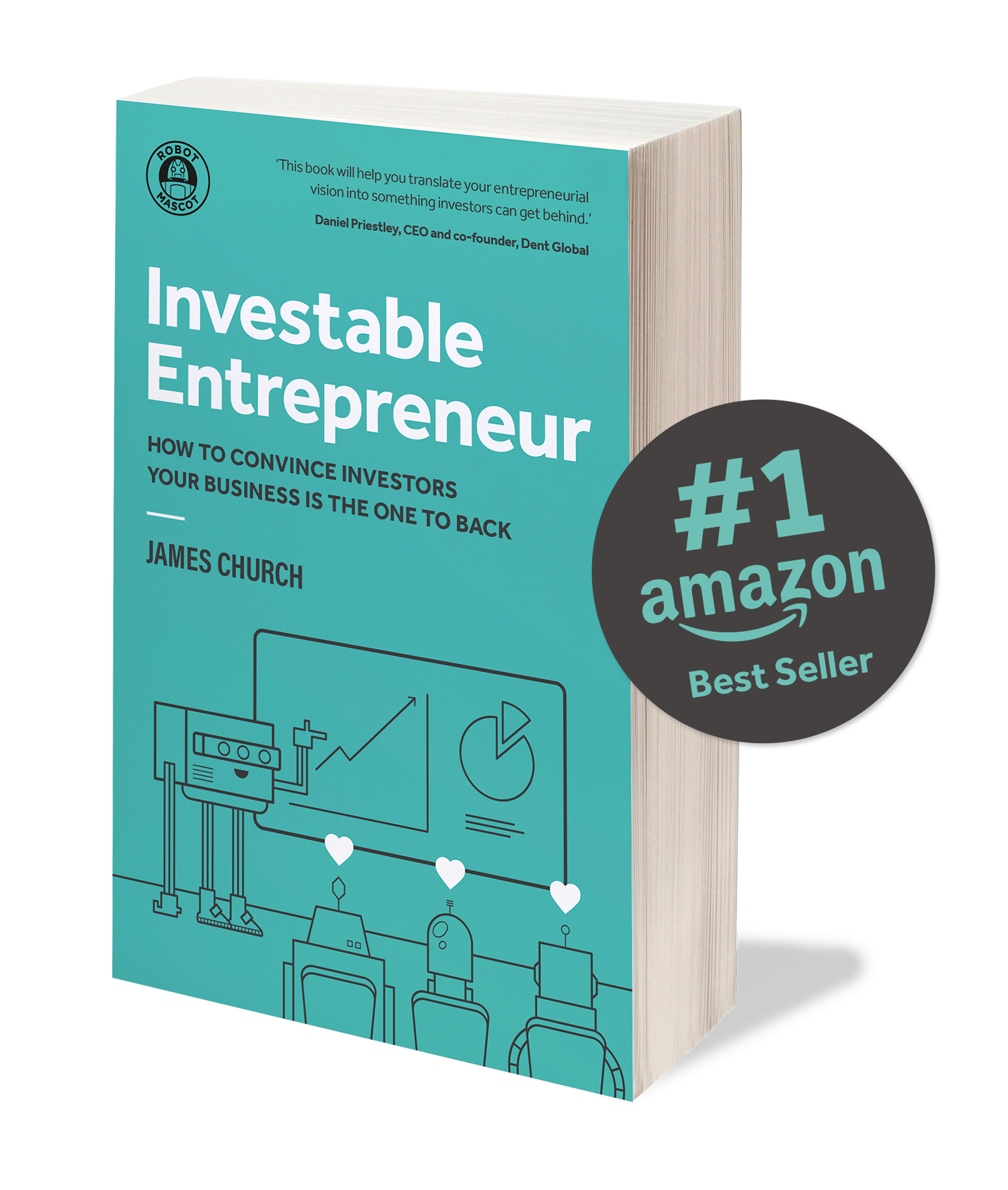
Claim your Free Copy of Investable Entrepreneur
Investable Entrepreneur takes you through our winning methodology – the process we use to increase our client’s chances of raising investment by more than 30x.
“This book will help you translate your entrepreneurial vision into something investors can get behind.”
Daniel Priestley, CEO and founder, Dent Global and four times best-selling business author
Recent Posts


Keep up to date with what we’re up to via email



Copyright ©Robot Mascot Ltd. All rights reserved.
