 Skip to content


Angel Investor Matchmaking for Startups: How to Do It and What to Expect
16th June 2025
Securing funding is one of the most daunting challenges for startup founders. While the entrepreneurial journey is filled with innovation and creativity, finding the resources to fuel your vision can be an uphill battle. Enter angel investors: those high-net-worth individuals who step in at just the right moment, offering not only financial backing but often mentorship, connections, and expertise. These are the people who believe in potential, even when it’s wrapped in uncertainty.
But what’s it really like to find and work with an angel investor? This guide will take you through the ins and outs of angel investor matchmaking, offering insight into the process, what you can expect, and how to prepare for a partnership that could change your startup’s trajectory.
Don’t forget that Robot Mascot can help you prepare a winning investor pitch deck to help you secure funding.

What are angel investors, and why are they important?

Angel investors aren’t your average financiers. These individuals—often successful entrepreneurs themselves—invest their personal wealth into early-stage businesses in exchange for equity. Unlike venture capitalists, who typically represent funds with large portfolios, angel investors are independent operators. They have the freedom to take risks on businesses that excite them, even if those ventures are still in their infancy.
What makes angels particularly attractive is their dual role as investors and advisors. They don’t just provide cash; they often become allies, offering guidance and opening doors to their networks. Many startups that are household names today owe their beginnings to angel investors. Consider WhatsApp, Uber, or even Amazon—each had early believers who helped them scale at a time when success seemed anything but guaranteed.
READ: A Complete Guide to Angel Investors for Small Businesses and Startups
What is angel investor matchmaking?
Angel investor matchmaking is the process of connecting startups with individual investors who can provide funding, mentorship, and valuable networks. Think of it as a strategic partnership-building exercise: the goal isn’t just to secure financial backing but to find an investor whose expertise, interests, and resources align with your startup’s vision and needs.
At its core, angel investor matchmaking works much like any relationship-building effort. It involves identifying potential investors, understanding their investment criteria, and presenting your business in a way that captures their interest. But it’s more than a one-sided pitch; it’s about ensuring a mutual fit. The right match can make a world of difference—not just for securing capital, but for accessing strategic guidance that can help your startup navigate its early stages of growth.
Why is angel investor matchmaking important?

Not all angel investors are the same. Some bring years of industry expertise, while others are hands-off and focus solely on returns. Some prefer to invest in tech startups, while others are drawn to sustainable or socially impactful businesses. Matchmaking ensures you’re not just accepting money from anyone—it helps you find an investor who understands your business and is genuinely invested in its success.
For example, an angel investor with a background in e-commerce can offer tailored advice to an online retail startup, helping with supply chain optimisation or customer acquisition strategies. On the other hand, a generalist investor might lack the nuanced understanding to provide actionable insights.
READ: 11 Essential Things Angel Investors Look For in a Startup
How does the angel investor matchmaking process work?
The matchmaking process typically involves several steps:
Step 1 – Research and identify investors
Start by looking for angel investors whose interests align with your industry, market, or business model. Many angel investors operate within networks or platforms like AngelList, making it easier to find those who specialise in your sector.
Step 2 – Initiate contact
First impressions matter. Founders usually reach out via email, through mutual connections, or at networking events. The goal is to introduce your business compellingly and succinctly.
READ: How to connect with investors and win their trust?
Step 3 – Pitch and engage
The matchmaking process is about generating engagement. As you meet potential investors, the job is to quickly engage them in you and your opportunity, leaving plenty of time for questions and discussion. .
Step 4 – Qualify potential investors
Not every investor will be a good fit. Matchmaking involves evaluating whether the investor’s experience, approach, and expectations align with your startup’s needs.
Step 5 – Build a relationship
Beyond the initial investment, successful matchmaking is about fostering a long-term partnership. Open communication, shared goals, and mutual respect form the foundation of a productive relationship between founders and angels.
What makes a good match?
A good match is about more than money. It’s about shared values, complementary skills, and aligned expectations. Founders often find that the best investors act as strategic partners—offering insights, making introductions, and helping to solve problems that arise during the unpredictable journey of scaling a business. When done well, angel investor matchmaking sets the stage for a partnership that’s built to last.
Are you ready for an angel investor?
Before diving into the world of angel investment, it’s worth asking yourself a tough question: is your business ready? Angel investors are looking for opportunity, but they’re also looking for substance.
Start by conducting an honest appraisal of your startup. Do you have a clear business model? A strong value proposition? Evidence of market demand? While angels are more likely to take risks than other types of investors, they still need to see potential for growth and a solid foundation.
Proof of traction is key. This could mean you already have paying customers, promising partnerships, or data that shows your concept works. Investors will want to know how their money will be used—whether it’s for scaling production, entering new markets, or investing in talent.
Finally, think about your team. Investors back people as much as they back ideas. A cohesive, driven team with complementary skills will always be a more compelling prospect than a solo founder, no matter how good the idea.
Finding the right angel investor
Not all money is created equal. The “who” behind the cheque matters as much as the cheque itself. When searching for an angel investor, it’s important to look for someone whose values and expertise align with your vision. This isn’t just about funding; it’s about finding a partner who can contribute meaningfully to your journey.
Where do you look? Start with angel networks like AngelList or the UK Business Angels Association. These platforms are treasure troves of information, connecting you to investors with a track record in your industry. Events and pitch competitions can also be great hunting grounds. Don’t underestimate the power of a referral—word of mouth through your network could be the most effective way to find the right match.
When evaluating potential investors, research is your best friend. What companies have they invested in before? What do past founders say about working with them? Aligning with someone who has experience in your sector or shares your enthusiasm for your mission can make all the difference.
READ: Top UK Angel Investment groups: National and Regional
Are you ready to pitch? Pre-pitch preparation checklist

Before you even think about contacting investors, make sure you have your house in order. Angel investors want to see evidence that you’ve done the groundwork and understand your business. Here’s what you’ll need:
Financial metrics to showcase viability:
- Customer acquisition cost (CAC): How much does it cost to acquire a new customer? This is a key measure of efficiency.
- Customer lifetime value (LTV): How much revenue does each customer generate over their relationship with your business? Investors look for a high LTV relative to CAC.
- Runway: How long your startup can operate with its current funds.
- Monthly recurring revenue (MRR) or annual recurring revenue (ARR): If you’re in a subscription-based business, these metrics provide a snapshot of growth and predictability.
- Burn rate: How much cash you’re spending each month. This shows how quickly you’ll need additional funding.
Traction and validation:
- Proof of early traction, such as user growth, sales figures, or customer testimonials.
- Partnerships or collaborations that demonstrate demand or credibility.
Documentation:
- A detailed business plan outlining your goals, market analysis, competitive landscape, and strategy.
- A one-page executive summary that provides a high-level overview of your business.
- A clear and concise pitch deck.
READ: Critical Fundraising Assets: The three key assets you need to win investor confidence
Clear use of funds:
- Investors want to know how their money will be used. Be specific: Will it fund product development, marketing, hiring, or something else?
READ: How to Prepare Financial Projections for Potential Investors
What happens during the matchmaking process?
The process of connecting with an angel investor often begins with an introduction or a pitch event. Once you’ve made contact, expect a series of meetings. Initially, these will be about them getting to know you, your business, and your vision. They’ll probe into your strategy, your finances, and your future plans.
Don’t be surprised if they ask hard questions. These are people who’ve likely seen it all before—successes and failures alike. They’re testing your resilience, your knowledge, and your ability to handle the challenges that inevitably arise.
If they’re interested, you’ll move on to negotiations. Terms will be discussed, equity will be on the table, and you’ll need to agree on what their involvement looks like. Some angels take a hands-off approach, while others are more actively involved. Understanding and setting expectations at this stage is vital.
Building a lasting partnership
Once you’ve secured funding, the real work begins. An angel investor isn’t just a financial backer; they’re often a mentor and advisor. This can be invaluable, but it requires effort to maintain a good relationship.
Communication is everything. Regular updates, whether through meetings, emails, or reports, help keep your investor in the loop and invested in your success. Share your wins, but don’t shy away from challenges. Transparency builds trust and can lead to constructive solutions when things get tough.
Equally, don’t forget to utilise their expertise and connections. Ask for advice, seek introductions, and learn from their experiences. The more you engage with your investor, the more likely they are to go the extra mile to support you.
Final thoughts
Angel investors can be transformative for startups, providing not only funding but also the mentorship and connections that fuel growth. But like any relationship, it’s about compatibility, trust, and shared vision. Approach the process with preparation, honesty, and a clear sense of what you want to achieve.
Finding the right investor isn’t just about securing a cheque; it’s about finding a partner who believes in your potential and is willing to help you unlock it. The journey may be challenging, but for those who find the right match, the rewards can be extraordinary.
Don’t forget that Robot Mascot can help you prepare a winning investor pitch deck to help you secure funding.

How To Raise Capital For Your Business
How To Raise Capital For Your Business
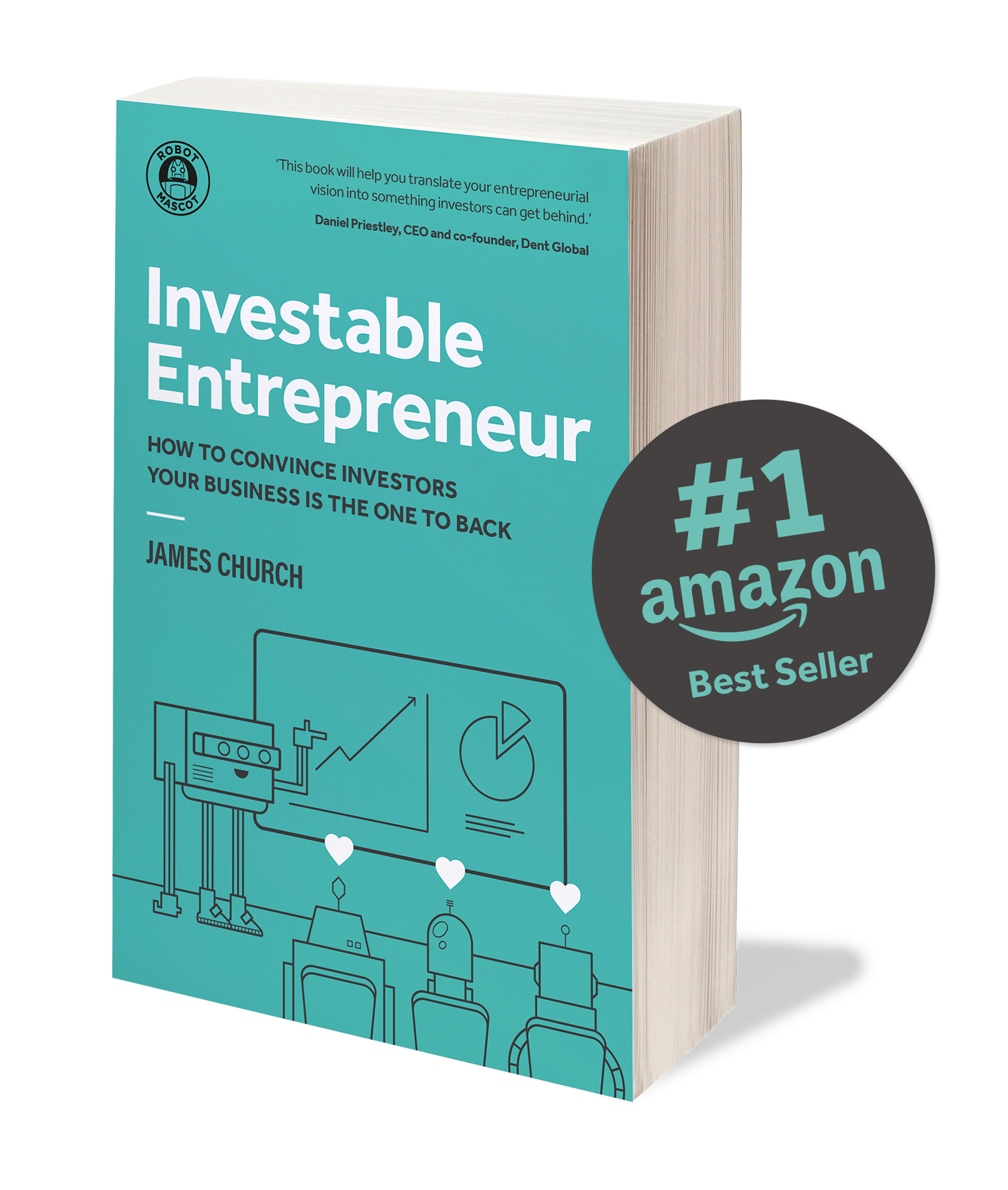
Investable Entrepreneur takes you through our winning methodology – the process we use to increase our client’s chances of raising investment by more than 30x.
“This book will help you translate your entrepreneurial vision into something investors can get behind.”
Daniel Priestley, CEO and founder, Dent Global and four times best-selling business author
Recent Posts


Keep up to date with what we’re up to via email



Copyright ©Robot Mascot Ltd. All rights reserved.
