 Skip to content


Weathering the Storm: UK Startups, Trump’s Tariffs and the Silver Lining for Investment
1st May 2025
A New Shock: Tariffs and Market Turmoil in 2025
UK founders are worried. Maybe even very worried. And understandably so. In early 2025, President Trump announced sweeping new tariffs on imports – a move that sent global markets reeling. On April 3rd, U.S. stock indexes suffered their worst single-day drop since the 2020 pandemic crash
This abrupt sell-off has rippled across the Atlantic, indeed the whole globe, feeding worries that a trade war-induced downturn could dry up investment for startups.
Yet amid the uncertainty, it’s worth remembering this isn’t the first storm founders have faced. History shows that after market shocks startup investment has proven remarkably resilient (and even opportunistic) in past crises. Let’s explore what we can learn from previous downturns – and why there are reasons for optimism.
Lessons from previous crises
2008: Global financial crisis – funding freeze to rebound
The 2008 global financial crisis hit markets hard.
But early-stage entrepreneurship quietly thrived. In fact, seed-stage financing was the least affected segment – seed investment grew through 2008–2010. Globally, the number of seed deals jumped 29% in 2009 and then over 50% in each of 2010 and 2011. While in Europe an extra $1bn was invested in seed funding between 2008 and 2009 – a whopping 78% annual growth.
New company formation didn’t falter; if anything, more founders took the plunge despite (or because of) the recession.
The result? Some of today’s tech titans were born in those lean years from Airbnb to Stripe.
The key lesson from 2008: initial panic gave way to innovation. While mature businesses tightened belts, early-stage founders kept building – and laid the groundwork for the next decade’s growth.

2016: Brexit vote – short shock, steady resilience
Summer 2016 brought a more local shock: the UK’s Brexit referendum. The vote for Britain to leave the EU sent the pound plummeting and created deep political uncertainty. Many tech entrepreneurs worried overseas investors would pull back and that London’s status as a tech hub might erode.
But in practice, UK startup funding proved resilient. Far from collapsing, venture funding in Britain increased in the aftermath of the Brexit vote. One study found an average of 69 startup deals per quarter post-referendum, compared to 45 per quarter before – with over $1 billion invested each quarter after the vote, up from $819 million before. In 2017, UK tech companies raised about £3 billion in VC – four times the amount in Germany, Europe’s next-largest market – underscoring that Britain remained the continent’s biggest magnet for venture capital.

Why did investment rise despite Brexit fears? A weaker pound made UK valuations attractive to foreign investors and many global funds saw British startups as too promising to ignore. By 2020, 63% of UK tech investment came from overseas (up from 50% in 2016), indicating that American, Asian and other backers stepped in enthusiastically even as some EU-based money receded. The London startup ecosystem kept its pole position and other UK regions also continued to grow their tech scenes.
To be sure, Brexit brought challenges (talent mobility, regulatory shifts), but it did not trigger a funding collapse. The Brexit episode taught us that market confidence can adapt quickly. Short-term jitters eventually gave way to business as usual, especially once investors saw that fundamentally strong startups were still a good bet in the UK.
2020: COVID-19 lockdowns – crisis spurs a tech boom
The COVID-19 pandemic was an unprecedented crisis – a sudden global lockdown that slammed the brakes on entire industries. Early 2020 saw a short pause in investments, while investors took stock. For a moment, it felt like startup funding would evaporate. And indeed, immediately after the lockdowns were announced, some startups had to wait to close their rounds. But the downturn was astonishingly short-lived. By late 2020, it was clear that the pandemic was actually accelerating demand for technology on all fronts – from remote work and e-commerce to online education and healthcare. Early-Stage investment came roaring back.

The feared slump turned into a surge as investors from Private Equity, Hedge Funds, VC and Angels moved capital from stock markets to founders.
The UK exemplified this rebound. Despite the chaos of COVID (and the lingering Brexit transition), 2020 turned out to be a record year for UK early-stage investment. British startups raised around $15 billion in 2020 – slightly more than in 2019 and an all-time high. Investment actually gained momentum as the year went on, peaking in Q4 2020. Not only that, but UK entrepreneurship soared at the grassroots level: over 770,000 new businesses were registered in the UK in 2020 – a 13% jump from 2019 – as many people used the disruption as an opportunity to start something new. Several new unicorns were minted in Britain during this period and tech IPOs in London picked up speed by late 2020.
In Europe more broadly, 2021 saw record early-stage investment activity, fueled by low interest rates and the digital transformation tailwinds from the pandemic. The COVID shock showed that crises can catalyse innovation: startups that addressed the “new normal” saw explosive growth and investors poured capital into businesses that proved essential during lockdowns and beyond. The takeaway for founders is powerful: even when the world shuts down, entrepreneurial opportunity doesn’t – it simply shifts to meet new needs.

Short-term pain, long-term gain for startups
Looking at these three crises, a clear pattern emerges. In the short term, major shocks do cause short-lived turbulence for startup funding. We often see deals slow down and valuations reset. The current tariff-driven jolt in 2025 is following this script: some founders actively raising right now will find that it takes a little longer to close, or that term sheets come in at lower valuations than just a few months ago.
However, the medium- to long-term outlook for startups looking to raise in 2025 and beyond remains optimistic, as history shows us. Economic downturns stimulate startup funding with early-stage rounds in particular proving the most resilient.
How long Trump’s trade war will last is unclear. What is clear is that history tells us the deeper the market slump, the more capital is transferred into early-stage business investments.
As Angel Investor and 4x exited founder of 8-figure businesses, Astan Maraj, put it to us: “There will never be a time when investors don’t invest – successful investors are most active during the downtimes.”
Turning adversity into opportunity
Far from being doom and gloom, downturns have a silver lining: they often create the next wave of success stories. Investors and founders alike can take heart in several encouraging trends that emerge in challenging times:
1. More opportunities for innovation
Problems abound in a crisis – which means fertile ground for innovators. Economic pressure forces customers (whether consumers or enterprises) to seek cost-saving or efficiency-boosting solutions. Startups that meet these needs can thrive. For example, during the 2008 recession, Groupon took off by helping people save money and Slack (founded 2009) addressed new efficiency needs in workplace communication.
In 2025, if tariffs drive up business costs, many firms will be looking for technologies to streamline operations or open new markets – exactly the kind of opportunity agile startups can seize.
2. Talent availability
A market downturn at big corporations can free up talented individuals who are considering launching or joining startups. We saw this in the early 2010s and again after 2020’s lockdowns when entrepreneurship spiked. More available talent means startups can build all-star teams, which is a long-term competitive advantage.
3. Investor focus on early stage
As later-stage exits (IPOs, large M&As) slow down in a turbulent market, many investors rotate back to earlier stages, where timelines are longer and valuations are more insulated from immediate public market swings. This can translate into a healthy funding environment for seed and Series A rounds even while headline IPO markets look bleak. Great ideas still get funded. In fact, some investors argue that downturns are the best time to invest – assets (startup equity) are effectively “on-sale” and future returns can be outsized when the cycle rebounds.
It’s telling that over half of all Fortune 500 companies were born in periods of recession or bear markets. Across history, innovative entrepreneurs have turned adversity into an advantage. During the 2007–2009 recession, over 50 tech unicorns (today worth $145 billion collectively) were founded – including Airbnb, which famously began when its founders, strapped for rent money in 2008, started renting out air mattresses in their flat.
In the UK context, iconic homegrown startups like TransferWise (Wise) and Gymshark both launched around challenging economic moments and grew to global stature. The pattern is clear: tough times don’t last, but tough startups do.
Staying resilient and looking ahead
For UK founders navigating this tariff-fueled downturn, the message is one of cautious optimism. Yes, the coming months may test our patience. You might need to update your pitch to address investors’ macro worries or bolster your business plan with contingency scenarios. But rest assured, the UK startup ecosystem is strong and global. British startups have weathered global recessions, political upheaval and pandemic lockdowns – and each time, they’ve emerged more competitive on the world stage.
Your job as a founder is to keep building value: engage your user base, refine your product, control costs and highlight whatever traction you achieve. If you can demonstrate resilience now, you’ll not only find investors, you’ll likely find true partners who share your long-term vision. As past crises have shown, early-stage investment doesn’t vanish – it just flows to the startups that adapt and execute best in a changing environment.
In a global context, the UK remains a beacon for innovation. Our universities, tech talent and creative culture continue to produce world-class companies. That won’t change because of a trade policy in Washington. In fact, UK and European founders can view this moment as a chance to claim even greater leadership in sectors like fintech, AI, green tech and life sciences, while others hesitate. The long-term trends – from digital transformation to the push for sustainability – are still in motion and will shape the next decades regardless of short-term market swings.
So, to the startup community: keep your nerve and take the long view. We’ve been here before and come through stronger. The April 2025 market dip is a challenge, not a dead end. If anything, it’s reminding us to be focused, resourceful and collaborative. Use this time to reconnect with mentors and peers, to shore up your business fundamentals and perhaps to spot gaps in the market that a chaotic global situation is creating. Investors will be watching for the startups that execute despite the headwinds – and those will be the breakout successes when fair winds return.
In summary
Trump’s tariffs may have rattled the markets, but they need not derail your startup ambitions. By learning from the past, staying agile in the present and building for the future, UK startups can not only survive this turmoil – they can position themselves to thrive when the clouds part. Every crisis has an endpoint and when this one passes, the startups that seized the opportunity will be ready to soar.

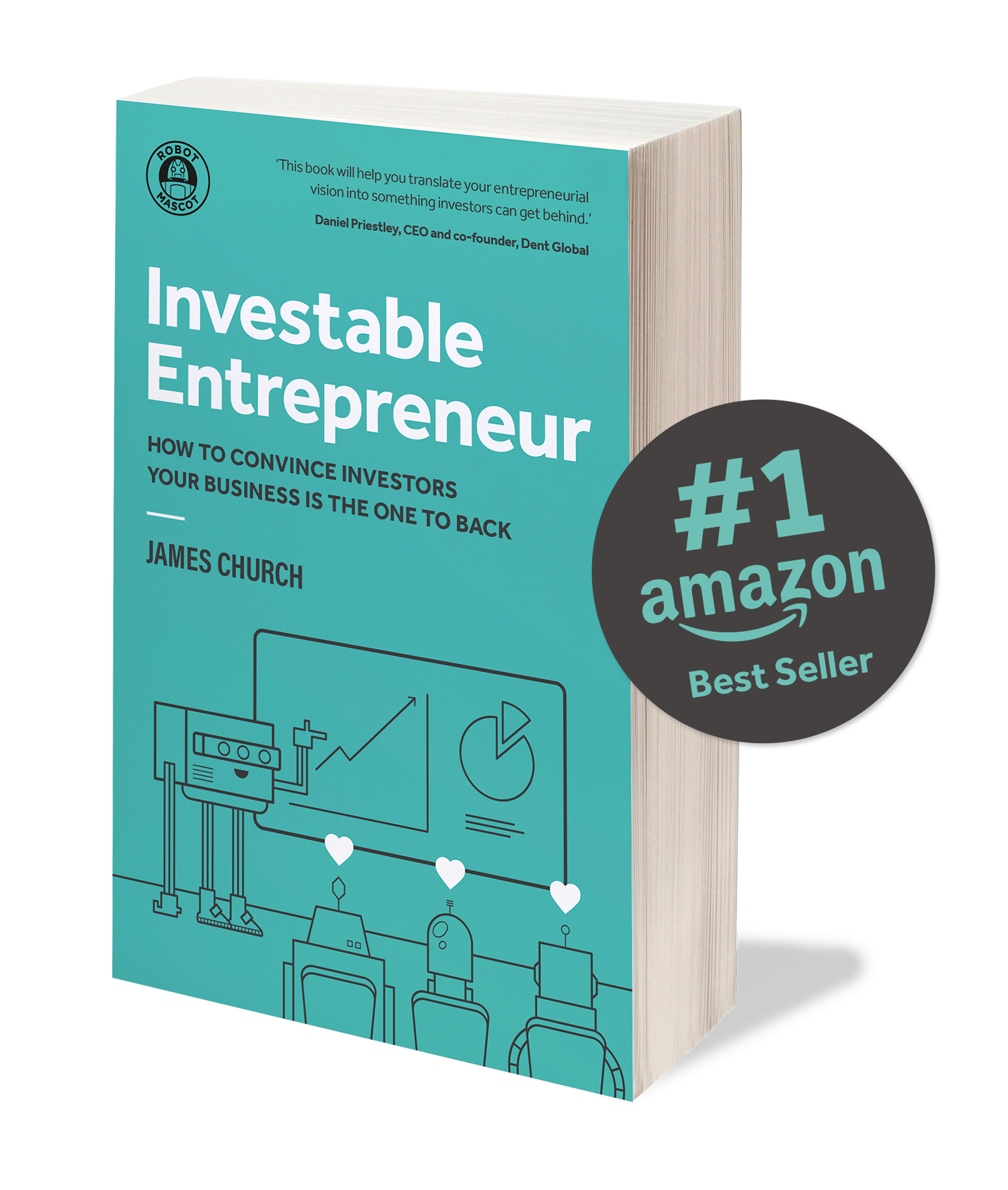
Claim your Free Copy of Investable Entrepreneur
Claim your Free Copy of Investable Entrepreneur
Investable Entrepreneur takes you through our winning methodology – the process we use to increase our client’s chances of raising investment by more than 30x.
“This book will help you translate your entrepreneurial vision into something investors can get behind.”
Daniel Priestley, CEO and founder, Dent Global and four times best-selling business author
Recent Posts


Keep up to date with what we’re up to via email



Copyright ©Robot Mascot Ltd. All rights reserved.
