 Skip to content


Startup Business Plan FAQ
11th September 2025
Creating a compelling business plan is one of the most important steps a founder can take when preparing to raise investment. It’s more than just a document – it’s a reflection of your strategy, your vision and your ability to build a commercially viable company.
In this FAQ, we answer the most common questions about startup business plans – what they are, why they matter and how to get them right. Whether you’re building yours from scratch or refining an existing draft, this guide will help you understand what investors expect and how to position your business for success.

What is a startup business plan and why is it important?

A startup business plan is a detailed roadmap that outlines how your startup will launch, grow and create value for customers and investors. It demonstrates your commercial viability and strategic foresight – critical for gaining investor confidence. Investors don’t just want a great idea – they want to see the logic behind it and the plan to turn it into a return on investment.
What do investors look for in a business plan?
Investors want to see:
- A clear problem and a credible solution
- Strong market opportunity and customer insight
- Commercial viability and route to revenue
- Strategic clarity on marketing, operations and sales
- Sensible, evidence-backed financial forecasts
- A defined ask: how much you want, what it’s for and the proposed terms
- An exit strategy that shows how they will make their money back
They also want reassurance that you, as a founder, understand the risks and are prepared to navigate them. A good business plan addresses both the opportunity and the reality.
What’s in a business plan for a startup?
Your business plan is your roadmap to success. And like all valuable maps, it needs a number of important elements.
- Short Term Plan
- This is all about the now. It’s your game plan for the next few months. How are you going to use that cash injection? What’s the immediate goal?
- Long Term Plan
- Think big picture. Where do you see your startup in, say, 5 years? This is your chance to paint a picture of growth and show investors the potential goodies down the line.
- Market Research
- Dive deep into the market’s nitty-gritty. What’s hot, what’s not and where does your startup fit in? This is where you prove you’ve done your homework and know the playground you’re stepping into.
- Marketing Plan
- Selling your product is huge! After getting the funds, getting the word out is the next big challenge. What’s your game plan to make some noise and get those customers rolling in?
- Investment Objectives and Exit Strategy
- Lay out the big wins you’re shooting for with the funds. And for the grand finale, give a sneak peek into the exit game – maybe some industry gossip on buyouts or mergers.
Piecing these elements together will give you a rock-solid business plan that shows investors you’re worth their time and money.
What is the difference between a business plan and a pitch deck?
A business plan is an in-depth document detailing your strategy and operations. A pitch deck is a concise, visual summary used in meetings or presentations. While a business plan sits behind the scenes for due diligence, your pitch deck opens the door. Both need to align in tone and message – but they serve different purposes and audiences.
What are the three critical fundraising assets?
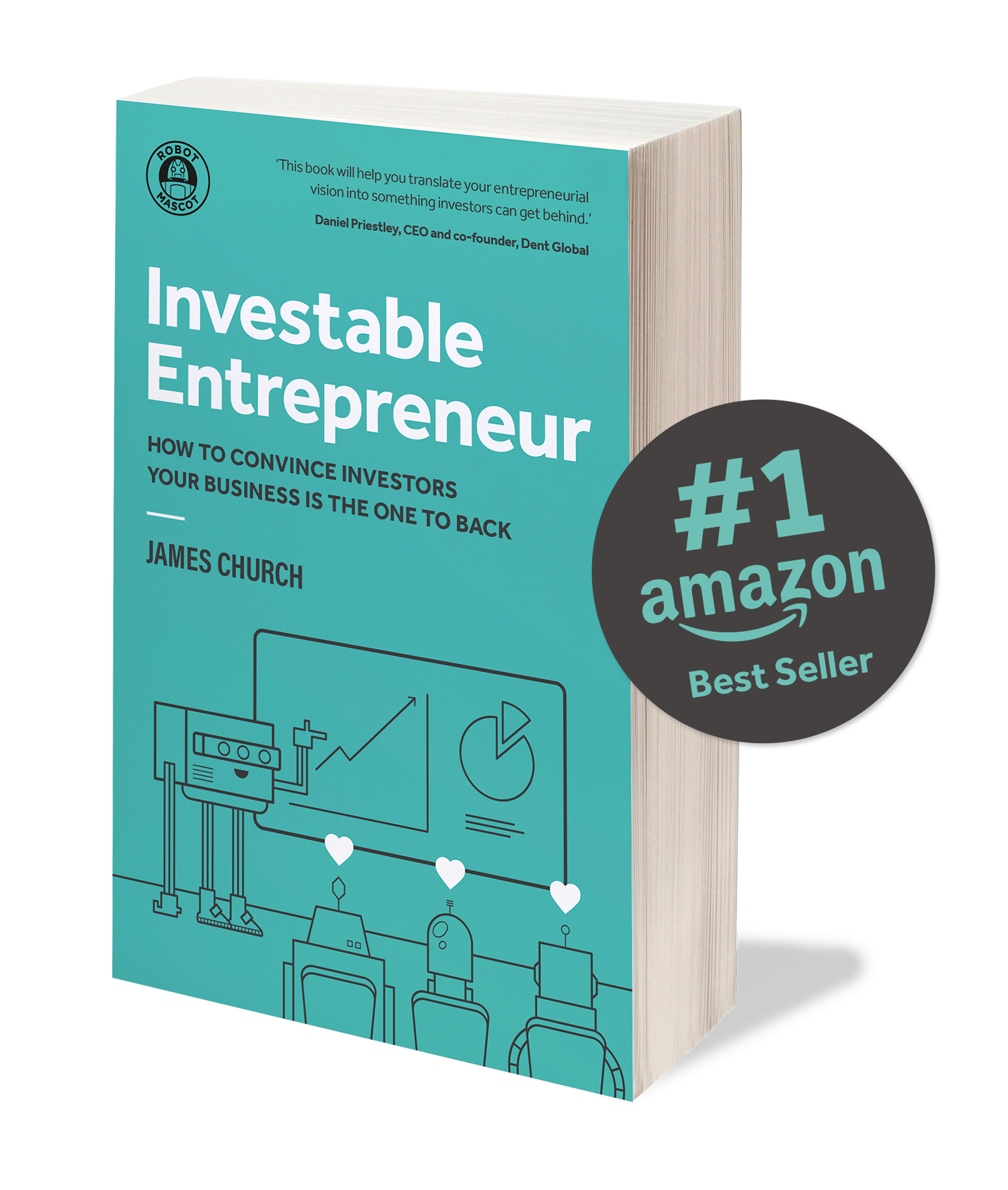
In his Amazon bestselling book, Investable Entrepreneur, Robot Mascot co-founder James Church cites them as:
- Pitch deck – to open conversations and generate interest.
- Financial forecast – to show how your model works and where the return lies.
- Business plan – to demonstrate strategic thinking and long-term viability.
These three assets work in tandem to move you through the investment pipeline – from first impression to deal completion .
Why do most entrepreneurs fail to raise investment?
Often, it’s not the idea that’s the problem – it’s the execution of the pitch. Common reasons include:
- Lack of clarity in the business model
- Weak articulation of the market opportunity
- Inconsistent or unrealistic financials
- Unconvincing go-to-market strategies
- Poor understanding of investor expectations
Most critically, founders fail to “think like an investor” and address the information investors actually need to make a decision .
What makes a founder ‘investable’?
Investable founders do three key things:
- They demonstrate strategic thinking – showing they can lead, adapt and grow.
- They communicate value clearly and consistently – aligning business assets with investor expectations.
- They focus on the investor’s journey – understanding how to reduce perceived risk and maximise appeal.
How long does it take to create a strong business plan?
It can take anywhere from two to six weeks, depending on the complexity of your business and the level of support you have. It’s worth taking the time to get it right – especially if you’re using it to raise funds.
Should I include an exit strategy in my plan?
Yes. Investors invest to exit. A clear, credible exit strategy shows that you understand how they’ll make a return – whether through acquisition, IPO, or other liquidity events. It doesn’t have to be set in stone, but it must demonstrate strategic thinking and realism.
What if I already have a pitch deck – do I still need a business plan?
Absolutely. The pitch deck opens the conversation, but the business plan answers the deeper questions. It’s especially important during due diligence, when investors scrutinise your assumptions, logic and projections.
What’s the most important thing a business plan needs to prove?

The most critical factor is commercial viability. Investors want evidence that there’s a clear demand for your product or service and that your business can realistically turn that demand into revenue and growth. This means showing:
- Real customer pain points
- A credible solution and value proposition
- Validation through customer feedback, pilots, or early traction
- A scalable, logical route to market
- Sound financials that reflect your strategy
What are common mistakes founders make in their business plans?
Some of the most frequent mistakes include:
- Overcomplicating the plan – trying to include everything rather than what’s relevant
- Making unrealistic assumptions – especially around revenue, growth rates, or market share
- Ignoring the investor’s perspective – focusing too much on product and not enough on business case
- Lack of clarity and focus – a plan that feels unfocused undermines confidence
- Weak alignment between narrative and numbers – if your strategy doesn’t match the forecast, red flags will go up
How does a business plan reflect your understanding of the investor mindset?
Investors want to reduce risk and maximise return. Your business plan is your tool to show them:
- That you’ve identified and mitigated key risks
- That your business model makes sense and is executable
- That you’ve thought through the detail, but can communicate it simply
- That you’re an investable founder who understands what it takes to build a credible, scalable business
How do I demonstrate I’m an investable founder in my plan?
Your business plan should reflect qualities that investors associate with investable founders:
- Strategic thinking, not just passion
- Clarity in communication
- Realism in planning and projections
- Willingness to be challenged and iterate
- Alignment between ambition and evidence
Is the business plan just for investors?
No. While investment is a key purpose, a business plan is also a powerful internal tool. It helps you:
- Sharpen your strategy
- Align your team around goals and milestones
- Prioritise resources and manage growth
- Anticipate challenges before they arise
Creating it forces discipline and clarity – two essential traits for any successful startup
Why use business plan consulting services?

Crafting a robust business plan isn’t just about jotting down ideas; it’s an art and a science, requiring a blend of market insight, strategic thinking and foresight. There are lots of reasons you might choose to use a business plan writing service rather than doing it yourself. Consider the following:
- Expertise
- Business plan consultants like Robot Mascot bring years of experience to the table as well as knowledge in crafting business plans across various industries. People like us know what works, what doesn’t and how to tailor your plan to your unique business model.
- Time Saving
- As an entrepreneur, you have a lot on your plate. A consultant can take the burden off your shoulders, allowing you to focus on other vital aspects of your startup.
- Objective Perspective
- Sometimes, being too close to your business can cloud your judgment. A consultant provides a fresh, unbiased view, identifying potential pitfalls and opportunities you might miss.
- Market Research
- Consultants who offer business plan writing services often have access to premium market research tools and databases, ensuring your plan is backed by solid data.
- Networking Opportunities
- Given their industry involvement, consultants often have a vast network of contacts, from potential investors to industry experts, which can be invaluable for a budding startup.
- Investor-Ready
- Investors have specific criteria they look for in a business plan and seasoned consultants like us know these intricacies. As such business plan consultants can shape your plan to be investor-friendly, increasing your chances of securing funding.
- Ongoing Support
- And finally, the journey doesn’t end once the plan is drafted. Many startup consultants offer ongoing support, helping you navigate changes in the market, pivot strategies, or prepare for investor pitches.
If you think you could benefit from this, consider getting in touch with us. We’d love to hear about your business.

Claim your Free Copy of Investable Entrepreneur
Investable Entrepreneur takes you through our winning methodology – the process we use to increase our client’s chances of raising investment by more than 30x.
“This book will help you translate your entrepreneurial vision into something investors can get behind.”
Daniel Priestley, CEO and founder, Dent Global and four times best-selling business author
Recent Posts


Keep up to date with what we’re up to via email



Copyright ©Robot Mascot Ltd. All rights reserved.
