 Skip to content


Is Seedstrapping Right for Your Startup? A Founder’s Guide
4th September 2025
‘Seedstrapping’ is the latest buzzword doing the rounds in early-stage startup circles. It sounds neat. It sounds like a strategy. It might even be both. But behind the buzz is a serious strategic decision, one that can dramatically affect founder equity, investor returns, and the survival of your business.
So what is seedstrapping? And is it right for you?

What is seedstrapping?
In short, seedstrapping is a hybrid approach to startup funding. You raise a small, early round (often from angels or SEIS investors) to kick-start commercial operations. Then, rather than progressing to a traditional VC-backed Series A, you aim to grow sustainably. That means re-investing profits, staying lean, and prioritising control over speed.
It combines elements of two familiar paths:
1. Bootstrapping
building your startup without external capital, relying instead on personal funds or early revenue.
READ: What You Should Know About Bootstrapping Phase
2. Seed funding
raising a pre-seed or seed round to accelerate growth and attract institutional VC money later on.
READ: What Is Seed Funding And How Does It Work?
Seedstrapping is neither. It’s one small round and then, in principle, no more.
It’s a strategy that says: let’s use a bit of capital to get to market, then build a real business. Let’s keep our cap table clean, our burn rate low, and our independence intact.
Why seedstrapping appeals to founders

Let’s face it. Raising money is time-consuming, exhausting, and distracting. You pitch. You rework the deck. You pitch again. If you’re lucky, you raise. Then you do it all again six months later.
For many founders, that process is not only inefficient, it’s misaligned with what they actually want. If you value control, calm, or cashflow over blitzscaling, then seedstrapping has real appeal.
Founders are drawn to seedstrapping because:
- They retain more ownership and decision-making power
- They don’t have to chase vanity metrics or artificial growth
- They can build a culture around profitability and product, not valuation
- They sidestep the pressure of constant fundraising cycles
And for technical or product-led founders, it often makes sense. Why raise millions before you’ve proven product-market fit? Why give away 25% of your company before your first hire? Seedstrapping offers an alternative.
SERVICES: Explore our investor pitch deck services.
Why it appeals to early investors
This is where things get interesting. Early-stage investors – particularly those investing through the UK’s SEIS and EIS schemes – are often happy to write cheques into lean, well-run startups. Especially if they know their equity won’t get diluted into dust later.
READ: SEIS vs EIS explained
In a seedstrapped business, there may be no Series A. That means no later round to drive down early investor stakes. Instead, if the business grows sustainably and exits for a modest multiple, everyone wins. A 10x return on a lean exit is still a 10x return.
But here’s the dilemma: investors need scale.
SEIS is a brilliant risk mitigation tool, but the ultimate goal isn’t to avoid loss. It’s to find outliers. The kind of companies that don’t just survive – they thrive, scale, and exit.
And if seedstrapping becomes a proxy for businesses that tread water, that plateau at low seven-figures, or that can’t break out of their niche, then early investors will sour on the model.
So founders need to do more than survive. They need to demonstrate that seedstrapping is a strategic phase – not a safety blanket.
Investor perspective
Phil McSweeney, Angel Investor
Phil: “I think the seedstrapping advocates still believe you can scale and possibly give away too much equity at its cheapest point. As an investor, I agree: no more zombies in my portfolio. Most investors are looking for 10x+ to offset the high failure rate of startups. A zombie company is worse than a failure most of the time.”
Robot Mascot: “So for you, you’d rather see a push for high growth and accept the risk of failure – instead of ending up with a portfolio of SMEs that survive but never scale?”
Phil: “Exactly. Without the possibility of a meaningful exit, what’s the point? We need growth, or a clear path to it – not just survival.”
The risks of getting it wrong
Seedstrapping sounds clever. Tactical. Wise. But it can also be fatal. Here’s why:
You might undercapitalise your business
Not every startup can or should be built on a shoestring. Some need to spend – on tech, on compliance, on customer acquisition. If you go lean when you should go large, you risk stalling.
You might scare off investors
If you’re raising a pre-seed round with the explicit goal of never raising again, ask yourself: is that an attractive proposition for the investor you’re pitching to? Do they see a path to exit?
You might misread the market
Seedstrapping works best in capital-efficient markets – SaaS, creator tools, low-complexity platforms. If you’re in fintech, healthtech, deeptech, or any vertical where market dominance is winner-takes-all, slow growth might mean no growth.
You might get stuck
You raise £200k, build a decent product, land a few customers, hit £30k MRR… and then what? If you haven’t invested in marketing, if you haven’t found scale, if the next phase needs more cash – but your strategy precludes a raise – then you’re stuck.
Investor perspective
Mark Hurren, VC
Mark: “Where does that seed money come from, and how are investors getting their return? If I’m that investor, I have to ask: is my money better off in a tracker fund? It’s tough to justify a bet on a business that won’t raise again or can’t show a route to a meaningful exit.”
Robot Mascot: “So you’re saying this model only works in rare cases where potential returns can be realised from just one round? Otherwise, you might as well invest in less risky assets.”
Mark: “Exactly. VC works because the wins outweigh the losses. If the returns don’t justify the risk, the funding dries up.”
So who is seedstrapping right for?

There is no universal answer. But here are some indicators that seedstrapping might be a good strategic choice:
- You’re a solo founder or small team with strong execution skills
- Your MVP is already built, or can be built cheaply
- You’re in a market where early revenue is feasible
- You have a monetisation model from day one
- Your burn rate is low, and you don’t need to hire fast
- You care more about ownership than hypergrowth
And here’s when it probably isn’t:
- You’re competing with heavily funded rivals
- Your customer acquisition costs are high
- You need technical hires or infrastructure you can’t afford
- You’re pre-product, pre-traction, and pre-revenue
- You want to exit fast
Founder insight
Steve Johnson, Startup Founder
Steve: “Not sure that the ‘modest returns’ trade-off is necessarily true. Less dilution makes this far more nuanced. If the foundations are solid, the founder has options – raise again if it makes sense, or carry on sustainably. The problem is raising before those foundations are in place. You’re behind the curve and forever chasing. Bootstrapping lets you build in peace, which leads to better decisions – external pressure biases thinking.”
Robot Mascot: “So if I understand you right, you’re saying: raise just enough to reach sustainable breakeven, then decide – grow through revenue, raise again later if needed, or just stay lean and in control?”
Steve: “Exactly. Build your runway. Then choose.”
The UK context: SEIS, angels and alternatives
The UK is uniquely well suited to seedstrapping, thanks in large part to SEIS and EIS. The Seed Enterprise Investment Scheme lets startups raise up to £250,000 from UK investors who get 50% income tax relief and loss relief if things go wrong. That’s a powerful incentive.
Combine this with:
- An active and growing UK angel ecosystem
- Dozens of early-stage accelerators and incubators
- Access to Innovate UK grants and R&D tax credits
- Low-cost tools and global distribution platforms
And you’ve got a fertile environment for lean, capital-efficient startups to thrive.
You don’t need to raise £1m to make progress. You can raise £200k under SEIS, validate your product, reach profitability, and stay in the game long enough to decide your next move. That’s seedstrapping at its best.
Investor perspective
Maurice Grasso, Investor
Maurice: “Why assume reduced returns? A founder with 80% equity, and early-stage investors holding 20%, could walk away with more money than in a VC-funded scenario. Even with a lower exit value. It opens the door to more buyers too. Lower valuations, fewer preferences and likely a higher batting average, financially.”
Robot Mascot: “So seedstrapping means a lower exit, but much less dilution, and that trade-off often benefits both founders and early investors?”
Maurice: “Exactly. In many cases, the early investor gets the same or better return, without the fireworks (and flameouts) that come with VC-fuelled growth-at-all-costs strategies.”
What investors want to hear
If you’re planning a seedstrapped approach, be clear and credible with your investors. Tell them:
- What you plan to achieve with their money
- How you will turn it into traction, not just tech
- What your runway looks like and how you plan to extend it
- When you reach sustainable breakeven
- How you plan to reinvest profits for growth
And most of all:
- How they will get a return.
Venture capital perspective
Mark Hurren, VC
“The reality is this: managed risk is what keeps VC turning. The moment the risk outweighs potential return, the money disappears. I love the idea of seedstrapping: build a business with solid monetary policy. But unless the exit path is clear, most investors won’t touch it.”
Whether it’s a dividend model, an acquisition plan, or a share buyback, make sure you can articulate what success looks like – and how their investment turns into real money, not just a warm feeling. Because remember: for investors, survival is not the goal. Returns are.
Seedstrapping as a strategy, not an excuse
There’s a danger that seedstrapping becomes a euphemism for underperformance. A way to reframe small ambitions as smart decisions. But used correctly, it’s a powerful tool.
It’s a way to:
- Reduce dilution
- Increase optionality
- Buy time to find product-market fit
- Prove traction before a big raise
- Some of the best businesses are built this way.
- Just make sure you’re choosing it for the right reasons.
- Not because you couldn’t raise. But because you didn’t need to.
TL;DR:
Seedstrapping means raising one small seed round, then growing through reinvesting profits. It gives founders more control and early investors more clarity. But it only works if your business model supports sustainable growth and your team can execute.
If you choose this path, be clear on the trade-offs. Seedstrapping is not a shortcut. It’s a strategy. Pick wisely and plan for scale, even if you’re starting small.
READ: A UK Entrepreneur’s Guide to Government Schemes for Start-Ups

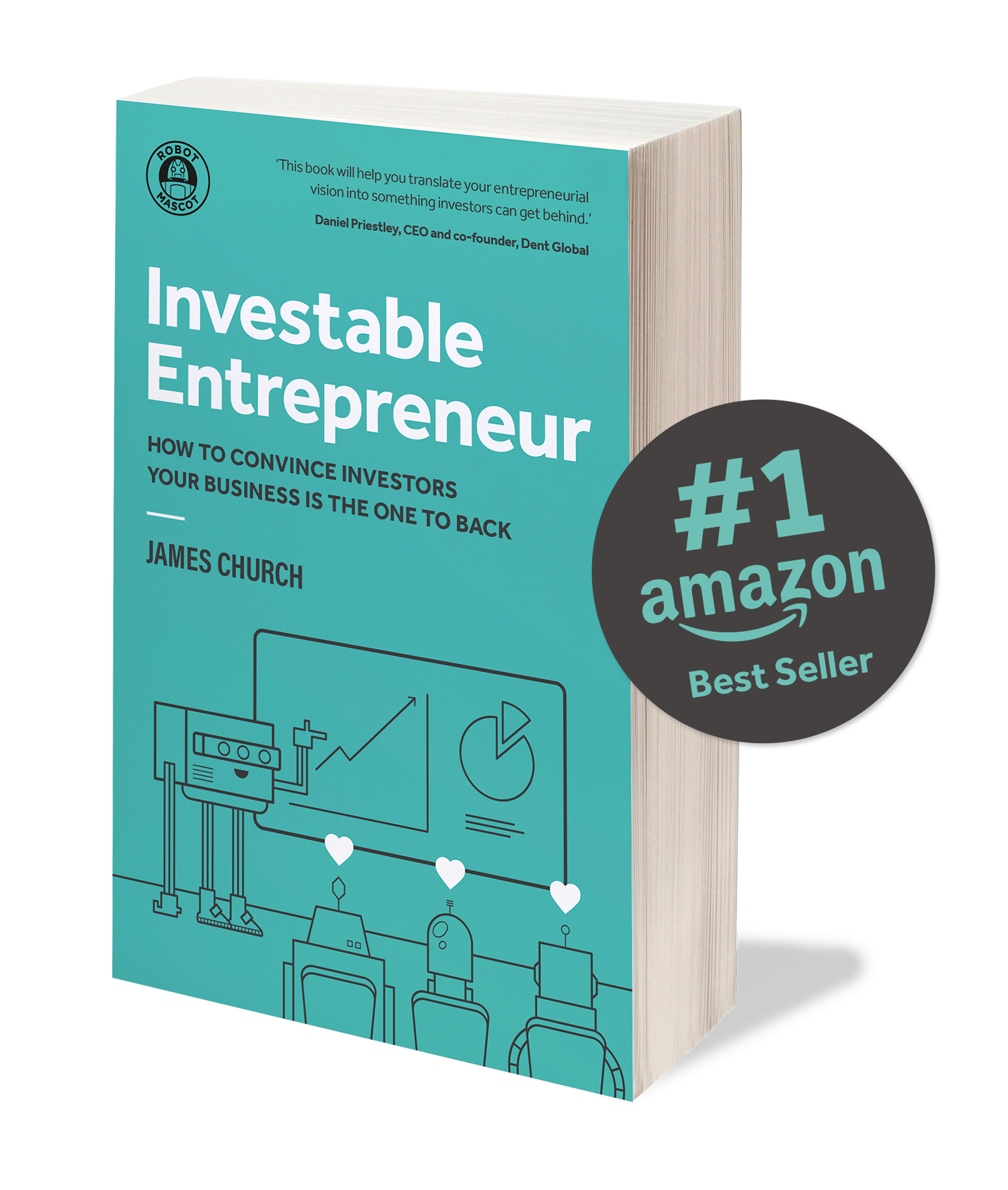
Claim your Free Copy of Investable Entrepreneur
Investable Entrepreneur takes you through our winning methodology – the process we use to increase our client’s chances of raising investment by more than 30x.
“This book will help you translate your entrepreneurial vision into something investors can get behind.”
Daniel Priestley, CEO and founder, Dent Global and four times best-selling business author
Recent Posts


Keep up to date with what we’re up to via email



Copyright ©Robot Mascot Ltd. All rights reserved.
