 Skip to content


How to Present Your Startup’s Financial Projections
25th September 2025
How To Present Your Startup’s Financial Projections In An Investor Pitch Deck
When founders present their pitch deck to investors, financial projections often feel like one of the trickiest parts. They’re complex. They’re speculative. And they’re vulnerable to scrutiny.
But while founders may worry about predicting the future, investors aren’t looking for certainty. What they want is insight. Your financials aren’t just numbers, they’re signals. They reveal whether you understand your business model, your route to growth, and your own capital requirements. They expose gaps in your thinking or showcase the sophistication of your strategy.
Done well, projections help investors believe in your plan. Done badly, they can instantly erode credibility, long before you’ve said a word.
This guide sets out what investors are really looking for in your financials, how to present them throughout your deck, and which mistakes to avoid. It draws on insights from Robot Mascot, the UK’s leading pitch agency, and their experience helping hundreds of founders raise millions in funding.
Don’t forget, Robot Mascot can help you prepare not only your financial projections, but your investor pitch deck.

Why projections matter, and what investors really look for

In simple terms, your projections serve two functions.
First, they show whether you’ve properly planned and budgeted. Investors want to know:
- Have you hired enough staff to achieve your goals?
- Are you investing enough in marketing to drive growth?
- Is your cash burn realistic?
- How long will this round of funding last?
These short-term signals help an investor assess whether your ask is feasible, whether your spend aligns with your intended results.
Second, they reveal your understanding of your growth trajectory. This isn’t about precise prediction. It’s about ambition versus realism. A five-year forecast gives investors a sense of:
- Do you understand what kind of business you’re building?
- Is your path to scale plausible given your model and market?
- Are you projecting a return that makes sense for a venture investor?
For example, if you show £100 million in revenue by year five with a 60% EBITDA margin, most investors will instantly disengage. That kind of margin is virtually impossible in a tech startup at that scale. It tells them, without needing to speak to you, that you don’t understand the operating costs, headcount, or marketing spend required.
By contrast, a well-judged forecast, say, £25–45 million in revenue by year five, with a margin aligned to sector norms, shows that you’ve done your homework. That you get the model. That you’ve looked at how similar companies grow and scale. In other words: you’re credible.
READ: Top 5 Financial Forecasting Tools For Startups
Where financials go in the deck, and how they support your narrative
Your financials don’t just belong on one slide at the end. In a well-structured pitch deck, they’re threaded throughout, reinforcing your story at each stage.
Act I – The hook
Here, a short executive summary might include a topline statement: “We’re raising £1.2 million to reach £3m ARR within 18 months.” This frames the investment ask within a growth ambition, a hint of what the investor can expect in return.
Act II – The essence
This section is typically focused on your solution and its value, so financials are less prominent here. But your model (e.g. SaaS, marketplace, product-based) should be clearly communicated, so that later financials make sense.
Act III – The evidence
This is where past financial performance plays a role. Investors want to see:
- What have you achieved so far with existing funds?
- What’s your current CAC or LTV?
- How are your acquisition costs trending?
- Have you used capital efficiently?
This also includes your TAM, SAM and SOM slides, where your projected market share (SOM) should align with your revenue goals. For example, if your SOM is 1% of a £10 billion market, that suggests £100 million in revenue. But if you claim you’ll reach that in five years, you’re likely being unrealistic.
Act IV – The plan
This is where your five-year forecast lives, alongside your go-to-market strategy, hiring plan, and any implementation or product development roadmap. It’s also where financials reinforce the logic of your growth. If you say you’ll improve LTV through product development, or reduce CAC through marketing automation, show how those changes manifest in your numbers.
This section can also include a funding milestone roadmap, for example:
- Pre-seed: £250k for MVP development
- Seed: £1.2m to build traction
- Series A: £5m to scale sales and expand internationally
Mapping these against your projected revenues helps show how your capital plan supports your strategic journey.
Act V – The ask
This is where your use of funds chart appears, the breakdown of how this round’s investment will be spent. For example:
- 40% on product development
- 35% on sales and marketing
- 15% on team and operations
- 10% on legal, compliance and runway buffer
It’s critical that this breakdown aligns with both your current stage and your growth strategy. For instance, at pre-seed, the majority of spend should go into product/IP. If you show 80% under ‘operations’, an investor may conclude (rightly or wrongly) that most of the money is going into founder salaries. That’s a red flag.
Founders should allocate their own salaries according to the functions they perform, R&D, product, marketing, operations, not bury them under a vague ‘ops’ label.
DOWNLOAD: Financial Forecast Template for Free
How to present projections so they’re believable

Numbers alone don’t tell the story, how you present them matters too.
Use visual storytelling
Avoid data dumps. Use charts, graphs and infographics to make the trajectory clear at a glance. Support them with short, sharp headlines that summarise the point of the slide, for example:
- “Capital-efficient growth driven by high LTV and low CAC.”
- “£3m ARR by Year 2 with 40% YoY revenue growth.”
Break them up
If you have ten financial points to make, don’t cram them onto one slide. Spread them across three or four slides, each with a clear focus:
- High-level forecast
- Revenue model and margins
- Unit economics
- Use of funds
It feels lighter and more digestible, while letting you control the narrative.
Anchor to your story
Your forecasts should support your pitch’s central message. For example:
- If you’re pitching capital efficiency, show strong unit economics and lean headcount.
- If you’re pitching rapid scale, show aggressive revenue growth backed by proven CAC/LTV performance.
Don’t include a metric just because someone told you to. Use the ones that reinforce your specific investment thesis.
READ: How to Prepare Financial Projections for Potential Investors
What metrics matter most in a pitch deck
There’s no one-size-fits-all formula, but for most early-stage tech startups, investors will expect to see:
- 5-year P&L forecast
- Revenue and margin projections (gross and EBITDA)
- CAC and LTV (Customer Acquisition Cost and Lifetime Value)
- Revenue per employee (especially if hiring is a major theme)
- Unit economics drawn from your business model
- ARR or MRR (for subscription businesses)
- Use of funds breakdown
- Funding milestone roadmap
If hiring is a major driver of growth, you might also include headcount forecasts and efficiency metrics, e.g. revenue per FTE (full-time equivalent). A benchmark for a good tech startup might be around £300k ARR per employee. If you’re projecting £1 million per staff member, that could raise eyebrows.
The red flags that kill investor confidence

Certain mistakes in financial slides signal a lack of understanding and instantly undermine credibility:
- Unrealistic margins – e.g. 60% EBITDA in a SaaS business at scale
- Misaligned market vs revenue claims – projecting 1% of a market too quickly
- Inflated or undercooked CAC/LTV ratios
- Overuse of ‘operations’ in spend, especially at pre-seed
- Overstated efficiency – e.g. implausibly high revenue per staff member
- No link between use of funds and product/IP development
Ultimately, investors want to see that you’re investing in value creation. If you have no customers yet, the value is in your IP. If you’re scaling, the value may be in customer acquisition. Either way, your financials should show that you’re deploying capital into the things that increase your company’s worth.
The last word: projections as a signal of credibility
Financial projections aren’t about predicting the future, they’re about showing you understand what your future could look like. They prove you know your numbers. Not just what they are today, but what they need to be at scale. They reveal whether you grasp your margins, your growth levers, and your capital needs. And they tell an investor: this founder gets it.
At Robot Mascot, this is core to the work: helping founders build a pitch that’s not just inspiring but investable, grounded in a story that’s reinforced by smart, credible numbers. Because in the end, a strong financial forecast doesn’t say “we’ll be right.” It says, “we know what we’re building, and we know what it takes to get there.”
Don’t forget, we can help you prepare not only your financial projections, but your investor pitch deck.

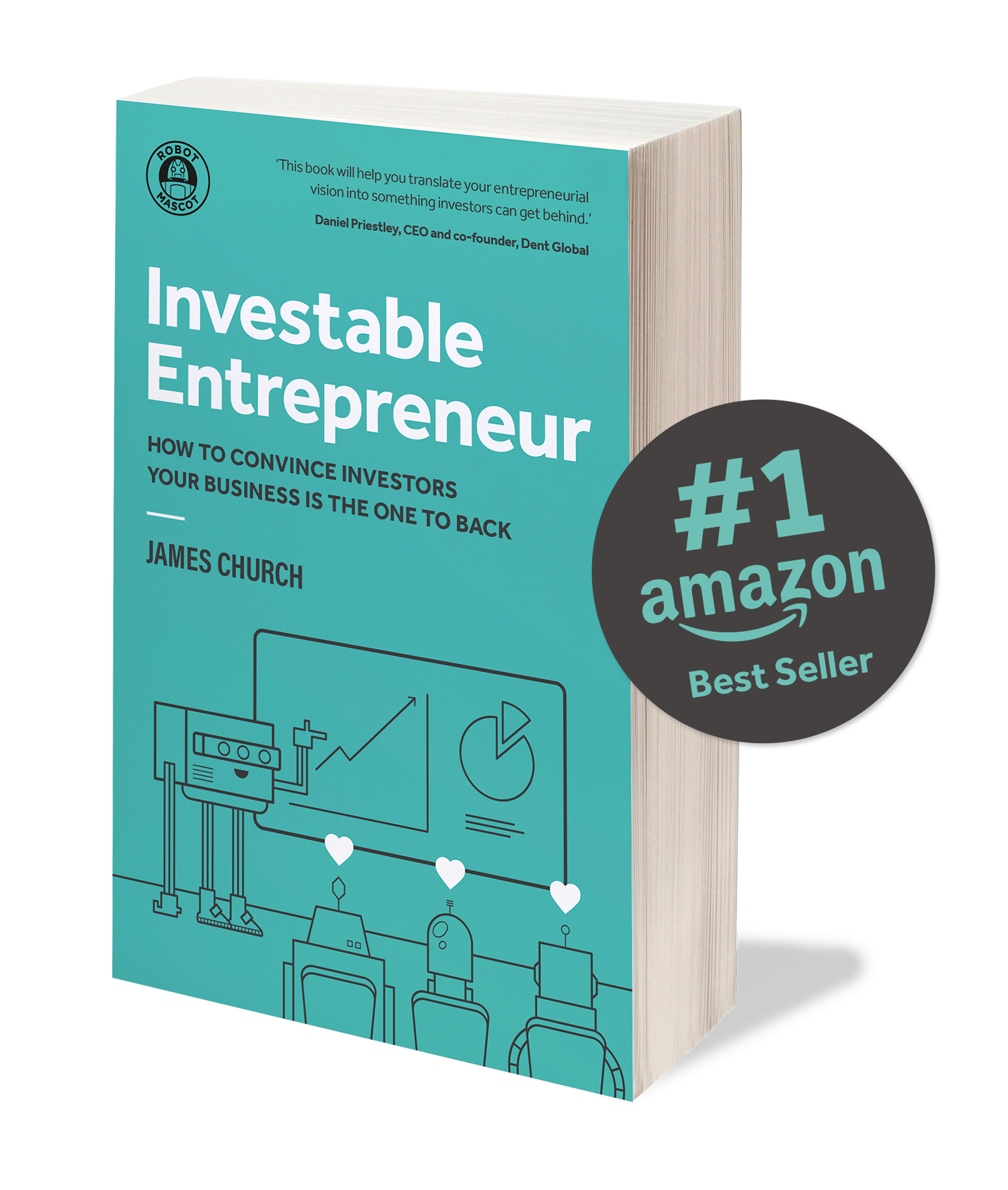
Claim your Free Copy of Investable Entrepreneur
Investable Entrepreneur takes you through our winning methodology – the process we use to increase our client’s chances of raising investment by more than 30x.
“This book will help you translate your entrepreneurial vision into something investors can get behind.”
Daniel Priestley, CEO and founder, Dent Global and four times best-selling business author
Recent Posts


Keep up to date with what we’re up to via email





Copyright ©Robot Mascot Ltd. All rights reserved.
