 Skip to content


How to legally protect your business from Co-founder disputes?
15th June 2023
In this week’s newsletter, Dragon Argent corporate lawyers in London advice startups on how to legally protect their business from co-founder disputes or managing the exit of a founder.
When you first embark on a business venture, your relationship with your co-founders is based on excitement, ambition, shared objectives, and is full of optimism. The plan is to build a business together, take on some investment, scale up, conquer the world and ultimately sell the company, having retained as much equity for yourselves in the process as possible.
But the startup road is bumpy and the demands of building a business can strain relationships with even the most solid of foundations. The pressure of leading a business can shine a light on personality traits that might have gone under the radar, and previously shared views and objectives can quickly diverge.
Sometimes, the initial excitement and camaraderie can wane. Some founders may not like the pressure of startup life and simply want to move on. Others may be toxic to the business and need to be removed.
In either case, you may find yourself with an ex-founder who is no longer contributing to the business but who is still sitting on a sizeable chunk of equity.
This isn’t ideal, for a variety of reasons. Depending on the number of shares the departing founder retains, they may still have an element of control over the company, or at least the ability to block key decisions. You may also be left with a situation where the remaining founders are working long hours to help enrich someone they have fallen out with. Hardly motivating.
So, what’s the solution?
In the first instance, founder disputes or managing the exit of a founder should be dictated by the terms of the relevant founder’s contract of employment, together with the company’s constitution (i.e. its articles of association and any applicable shareholders’ agreement). We’ve written a separate article about the importance of a company’s constitutional documents and ensuring they are fit for purpose for your business. You can read this article here.
In many instances, founders will have been asked to sign up to terms under which the shares they hold “vest” over a certain period. This means that if they were to leave at any point during that period, a proportionate number of their shares will be clawed back from them.
A lot of founders are nervous to agree to these terms, quite understandably. Institutional investors can often insist on founder vesting as a condition of their investment at a point when those founders have been with the business for several years and have already shown huge commitment to the company.
Founder vesting schedules can therefore be seen as onerous or unfair, as they put into jeopardy the very thing that keeps a founder motivated to struggle on through tough times – a potentially life-changing pay-out on exit.
But another way to frame it is as a reflection of the pact that founders have already made with each other. And should one of them break that pact, why should their co-founder and the business suffer as a result? Sensibly drafted vesting provisions can provide a mechanism by which a founder’s shareholding is adjusted to give a fairer reflection of their (and their fellow founders’) commitment to the business.
However, if a smooth exit can’t be achieved, founders may find themselves in dispute. In this instance, a formal (time consuming and sometimes costly) dispute resolution process may be entered into which, frankly, should be the option of last resort for all parties. We’ve also previously written about dispute resolution in owner-operated businesses and you can find the article here.
If you find yourself in a founder dispute, one of the team at Dragon Argent would be happy to run through the options you have to resolve the situation in the quickest and easiest way possible.
Founder teams vs solo founders
“Investors favour founding teams, often preferring co-founders over solo entrepreneurs. But data suggests that in the long term, solo founders tend to perform better – they’re more likely to survive and generate higher revenue.
“Why? Because founders fall out.
“Starting a business is like a marriage – you’re deeply connected to your co-founder and like many marriages, that relationship can break down. If you’re choosing a co-founder just to appeal to investors, you’re making a mistake.
“It’s like getting married just because your parents want grandkids – not because you love the person.
“If you and your co-founder aren’t truly aligned, your visions will eventually diverge, leading to:
- The business failing, or
- One founder forcing the other out
“Either outcome is a major distraction, stalling growth and complicating fundraising.”
The tension between data and investor preferences
“Despite the long-term data favoring solo founders – 52.3% of successful startup exits came from solo founders – investors continue to push for co-founding teams. Why? Because in the short term, they get more resources for their money.
“If there are two or three founders, that means more people working full-time (often unpaid), stretching investor capital further. In the short term, that’s appealing – but in the long run, multiple founders can create competing priorities and instability.”
How startup accelerators shape this bias
“This preference for co-founding teams is reinforced by accelerators like Y Combinator and Techstars, which often prioritise businesses with multiple founders. Investors take cues from these programs, seeing the pattern of co-founding teams succeeding through accelerators and assuming that’s the best model.
“But this creates a mismatch:
- Long-term data suggests solo founders perform just as well, if not better, than co-founders.
- Short-term investor thinking prioritises co-founders because of immediate resource availability and the influence of accelerator models.”
The real reason investors reject solo founders
“Investors often say, “We don’t invest in solo founders,” but in reality, that’s usually a soft rejection.
“Instead of bluntly saying, “We don’t trust you with our money,” they offer excuses like:
- “Come back when you have more traction.”
- “We need to see more validation first.”
- “We only invest in founding teams.”
“Yet, the worlds most sucessful founders – Jeff Bazon (Amazon), Richard Brandson (Virgin), Melanie Perkins (Canva), Pierre Omidyar (eBay) – all starting out as solo founders. In fact, there’s been 300+ unicorn businesses with solo founders.
“At Robot Mascot, we work with both solo founders and co-founders and when it comes to funding success rates, there’s no real difference.
“There’s no one-size-fits-all model for startup success. Investors don’t fund ideas – they fund strong founders. Whether you have a co-founder or not, your success depends on presenting a compelling, investable opportunity – not just checking boxes.”
James Church, Robot Mascot co-founder

How To Value A Business
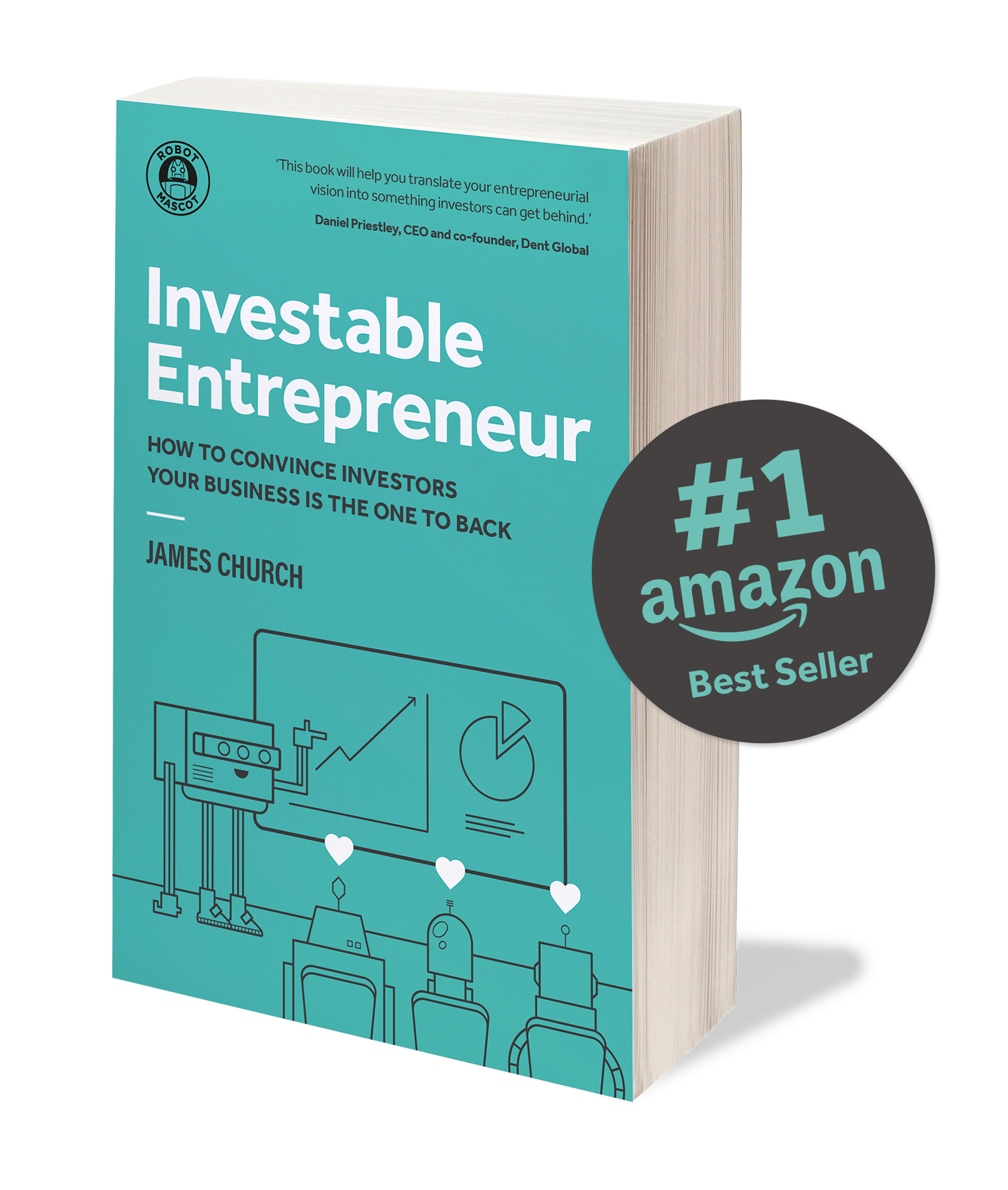
Investable Entrepreneur takes you through our winning methodology – the process we use to increase our client’s chances of raising investment by more than 30x.
“This book will help you translate your entrepreneurial vision into something investors can get behind.”
Daniel Priestley, CEO and founder, Dent Global and four times best-selling business author
Recent Posts


Keep up to date with what we’re up to via email



Copyright ©Robot Mascot Ltd. All rights reserved.
