 Skip to content


How to Adapt Your Pitch Deck for Different Types of Angel Investors
21st August 2025
When you’re pitching for investment, it’s easy to think of angel investors as one homogenous group. But in reality, no two angels are the same. Some are data-driven and analytical. Others are intuitive and emotionally led. Some want to guide and mentor. Others just want a solid return.
That means the most effective pitch decks aren’t just well-structured – they’re versatile. They tell a compelling story, but they also include something for everyone: proof for the sceptics, vision for the dreamers, traction for the cautious, and opportunity for the ambitious.
SERVICE: Explore our investor pitch deck services.
In this article, we explore how to craft a pitch deck so that it lands for seven different types of angel investors – drawn from insights shared by James Church, author of Investable Entrepreneur and co-founder of pitch agency Robot Mascot.

The Five-Act Structure
A winning pitch deck doesn’t just list facts – it tells a story. At Robot Mascot, we create decks that follow a five-act structure that mirrors a story arc: Hook, Essence, Evidence, Plan, and Ask.
- The Hook grabs the investor’s attention and piques their interest in your big idea.
- The Essence distills what your business does and why it exists, giving a high-level overview of your solution and mission.
- Next, the Evidence presents data or proof – traction, research, market validation – to back up your claims and show that your concept works in the real world.
- Then comes the Plan, outlining how you will grow the business and make it successful (covering your strategy, business model and financial projections).
- Finally, the Ask clearly states what you’re seeking from investors (e.g. funding amount and terms) and invites them to get on board.
This five-act flow ensures you cover everything from an emotional opening to a concrete conclusion, all in a logical order that investors can follow easily. Find out more about the Five-Act Structure.
Founders, however, often face a dilemma: you rarely know which type of investor you’ll be pitching to on any given day. Different angel investors have different personalities, priorities and pet peeves. Crafting an effective pitch requires understanding the audience you’re selling your shares to, not just your customers. In our experience, most angels can be grouped into seven investor archetypes. Each has unique traits and focuses on particular aspects of a pitch. To maximise your chances of success, your deck should retain the robust five-act structure while including elements that appeal to all these personality types.
Below, we break down the seven types of angel investors and offer tips on how to fine-tune your pitch deck to engage each one.
1. The Non-tech Investor

Non-tech investors are typically seasoned businesspeople from outside the tech world. They focus on commercial fundamentals like the business model and growth potential, rather than technical details. Their investment decisions are shaped by practical business experience and an interest in how the company will make money and scale.
They value clear, jargon-free explanations and a strong commercial case. They’ll focus on your market opportunity, revenue model, and execution strategy – especially the Plan section of your deck. Demonstrating customer demand, traction, and a credible path to profitability will help win them over.
Adapting your pitch for a Non-tech investor:
1. Cut the jargon and tech-speak
Use accessible, plain language to describe your product or service. If you must explain a complex technology, use analogies or simple terms so that an intelligent layperson can follow. The goal is to ensure they grasp the value without getting lost in technicalities.
2. Highlight the business model and market opportunity.
Emphasise how you plan to make money and the size of the market. For example, clearly explain your revenue streams, pricing, target customers, and go-to-market strategy. A Non-tech investor will be keen to see that the numbers make sense and that there’s a real demand for what you’re offering.
3. Demonstrate your business acumen and traction.
Instead of focusing on technical features, show any proof points that indicate your venture is a good business investment. This could be early sales, user growth, partnerships or other traction. In the Evidence act of your deck, include metrics or case studies that validate your concept in business terms (e.g. customer testimonials or revenue figures) to give them confidence in your venture’s viability.
READ: Should You Use Angel Investors For Funding For Your Start-Up?
2. The Eagle-eyed Investor
Eagle-eyed investors are highly analytical and detail-focused. They scrutinise every aspect of your business plan, financials, and forecasts, often requesting multiple meetings and follow-up materials. Their aim is to uncover any inconsistencies or risks and ensure your business is truly investable before making a commitment.
They value thoroughness, accuracy, and professionalism. The Evidence and Plan sections of your deck will be their main focus, so your data, projections, and assumptions must hold up under scrutiny. Be honest, consistent, and well-prepared – they respect founders who are transparent and can confidently back up their claims.
Adapting your pitch for an Eagle-eyed investor:
1. Double-check your numbers and facts
Ensure that all statistics, financial projections, and claims in your deck are accurate and up-to-date. An eagle-eyed person will quickly spot any discrepancies. Before pitching, cross-verify your data sources and be ready to show how you arrived at your figures (e.g. your customer acquisition cost or revenue forecasts). This builds your credibility and prevents “gotcha” moments during Q&A.
2. Prepare supporting documents and details.
Keep your pitch deck concise, but have detailed materials (like a full business plan, financial model or research summary) ready for follow-up. Detail-focused investors will expect this, and offering these documents shows you’re prepared and credible. A simple line like, “We have a full 3-year model available on request,” can go a long way.
3. Anticipate their questions.
Look for weaknesses in your deck and prepare clear answers. If you’re projecting fast expansion or high profit margins, be ready to justify those numbers. The more thought you’ve put into the details, the more confident you’ll appear – and the more trust you’ll build with a detail-focused investor.
READ: 11 Essential Things Angel Investors Look For in a Startup
3. The Follower Investor

Follower investors are more risk-averse and prefer to back startups that already have interest from other angels. They rarely lead funding rounds and typically wait for a credible investor to commit before they join in. While they may like your business, they feel more confident investing alongside others and often rely on consensus as a form of validation.
They look for social proof and momentum. Evidence of interest from lead investors, committed funds, or support from credible advisors will catch their eye. The Evidence and Ask sections of your deck are key – use them to highlight traction, testimonials, and existing commitments. Their main concern is not being the first in, but not missing out on a promising opportunity.
Adapting your pitch for a Follower investor:
1. Emphasise existing commitments or interest.
If any investors (or even well-known mentors) have already shown faith in your startup, make sure to mention it. A Follower is significantly more likely to invest once they know someone reputable is in. Even a small commitment from a lead investor or a respected figure endorsing your idea can push them off the fence. For example, you might say in your pitch, “We have a lead investor who has committed 100k, and we’re seeking additional angels to complete the round.” Such information signals that it’s safe for them to follow suit.
2. Highlight traction and social proof in your Evidence.
Use your Evidence act to show that customers or the market are already validating your idea. Strong user growth, revenue, crowdfunding support, or letters of intent from clients can all serve as social proof. The more you can demonstrate that “this train is leaving the station” – i.e. your startup is gaining momentum with or without them – the more a Follower investor will want to hop on.
3. Build relationships and keep them in the loop.
Follower investors may not bite on the first pitch if no one else has committed yet. Don’t be discouraged; instead, keep the conversation going. Provide updates on your progress (e.g. “Since we last spoke, we brought on a seasoned advisor” or “We’ve just hit a product milestone”). Once you do secure a lead or another investor, circle back to the Follower and let them know the round is coming together. By staying on their radar and showing progress, you make it easier for them to say “yes” when the timing is right.
READ: How to connect with investors and win their trust?
4. The Insightful Investor
Insightful investors bring more than capital – they want to actively support founders with their expertise. Often experienced in a relevant industry, they’re looking for startups they can mentor or advise, sometimes taking on formal roles like a Non-Executive Director. They’re driven by purpose and impact, and are drawn to ventures they believe in personally and professionally.
They value vision, purpose, and collaboration. A compelling Hook and a clear Essence that show heart and ambition will engage them. They look for founders who are coachable and open to input, and are often willing to help shape your Plan. If they feel their guidance will be welcomed and make a difference, they’re more likely to get involved – even if your business is still at an early stage.
Adapting your pitch for an Insightful investor:
1. Share your mission and values.
Talk about why you’re building the business, not just what you’re building. Insightful investors value a strong mission and want to back ventures that aim to create positive change. Use the Hook or Essence to show your passion and purpose — it can resonate with those who want to be part of something meaningful.
2. Demonstrate coachability and openness.
Make it clear you’re seeking more than just funding – you welcome strategic support too. Say, for example, “We’re looking for investors who can advise on scaling internationally.” Acknowledge good suggestions in conversation to signal you’re open to feedback – something Insightful investors value highly.
3. Highlight your team and what you’re missing.
Since these investors often step into advisor roles, make sure your deck showcases your team’s strengths and where a helping hand could amplify your success. For instance, include a slide or a point in the Hook/Plan about your team’s background and mention if you have an advisory board or plan to form one. If you lack experience in an area that the investor excels in, that’s actually a selling point: you’re creating an opening for them to contribute.
READ: What’s more important to investors: the idea or the team?
5. The Equity Grabber Investor

Equity Grabber investors are tough negotiators who push for a larger equity stake or lower valuation. While they may be financially savvy, their focus is often on securing the best possible deal for themselves. If every conversation centres around valuation rather than the business itself, you’re likely dealing with this type – and it can put your ownership at risk if not carefully managed.
READ: In a Startup, How Do Shares, Equity, and Dilution Really Work?
They look for leverage and value. Your Ask slide will be their main focus, and they’ll probe your Plan and Evidence for weaknesses to justify negotiating better terms. To keep them in check, present a strong, well-supported valuation backed by solid data and growth potential. They respect founders who understand their numbers and can confidently defend them, even while staying open to fair negotiation.
Adapting your pitch for an Equity Grabber investor:
1. Justify your valuation with evidence.
When you state your ask (e.g. “We are raising £500k for a 20% equity stake”), be prepared to back up why that’s fair. You can include points in your Evidence or Plan such as current revenue, growth rate, intellectual property, or comparable company valuations to ground your number. For instance, if your company already has £200k in annual revenue and is growing fast, mention it – it shows value. An equity-hungry investor is less likely to object to your valuation when you’ve shown concrete metrics and milestones that support it. In short, present a credible, data-driven case for your ask so there’s little room to claim it’s too high.
2. Know your walk-away terms.
Decide in advance what deal you’re willing to accept and stick to it. You can leave room to negotiate in your Ask, but be clear on limits. Reinforce how your funding target ties to your growth plan — show that giving away too much equity would compromise delivery.
3. Highlight the mutual benefits of a fair deal.
Sometimes you can turn the tables by appealing to the investor’s own interests. Emphasise in conversation (and perhaps subtly in your deck’s closing or Ask) what the investor stands to gain by partnering with you now, at this valuation.
For example: “At a £2m valuation, an investment of £200k today could yield a substantial return if we hit our projections – we’re aiming for a £10m valuation at Series A.” This reminds an Equity Grabber that negotiating you down harshly might risk losing the deal or demotivating you as founders. If they see that working collaboratively will make the pie bigger for everyone, they may be more inclined to accept a fair slice. And if an investor consistently challenges your valuation beyond reason, take it as a warning sign – it could indicate you’re asking for too much at your stage, or simply that this investor might not be the right fit for you.
READ: Sweat Equity – The Dangers of Giving up Too Much Equity Too Soon
6. The Spent Investor
Spent investors currently have no capital to deploy, often due to recent investments or hitting their tax-efficient limits. While they can’t invest now, they still take pitches to stay informed and connected. Crucially, they often have strong networks and may be able to introduce you to other active investors – making them valuable long-term contacts.
They’re drawn to exciting ideas and strong founder relationships. A compelling Hook and clear Essence will keep you on their radar for future rounds. Since they’re not investing immediately, they focus on the bigger picture and appreciate founders who respect their position and stay in touch. Impress them, and they may offer introductions – or return later when their investment pot is replenished.
Adapting your pitch for a Spent investor:
1. Deliver an engaging narrative.
You’re not pitching for now – you’re planting a seed. Use a strong Hook and compelling Essence to make your idea memorable. If they remember you, they may return later – or refer you to others in their network.
2. Leverage their network (tactfully).
If the relationship feels strong, it’s okay to gently ask: “If you know anyone who might be a good fit, we’d love an introduction.” You can also reflect this in your Ask by mentioning you’re seeking “smart money” or strategic support, not just cash.
3. Keep the door open for later.
Follow up now and then with quick progress updates to stay on their radar. They might invest in a future round – or become a mentor or advocate. Treat them with respect and appreciation, and the relationship could pay off down the line.
7. The Pessimist
Pessimist investors are naturally sceptical and tend to focus on what could go wrong. They may question your experience, assumptions, or growth plans, often playing devil’s advocate. While tough to win over, they can become strong backers if you address their concerns with confidence and credibility.
They value realism, preparation, and honesty. Strong Evidence and a detailed, risk-aware Plan are essential. Avoid hype and instead focus on showing you’ve thought through potential pitfalls. If you respond to probing questions with calm, well-reasoned answers, you’ll earn their respect – and possibly their investment.
Adapting your pitch for the Pessimist:
1. Emphasise data and realism.
Back up every key point with evidence. For every claim in your deck (“We have a scalable customer acquisition strategy” or “Our market is growing 20% year-on-year”), have a data point or logical argument ready. Use the Evidence section to showcase facts like market size, growth, user testimonials, etc., that lend credibility to your story. Also, be realistic in your projections – a pessimist will be immediately skeptical of forecasts that seem exaggerated. It’s better to present a conservative, well-reasoned growth projection that you can defend than an overly optimistic one that gives them ammunition to say “that’s not believable.”
DOWNLOAD: Financial Forecast Template
2. Address risks upfront.
One way to disarm a pessimistic investor is to beat them to the punch. Acknowledge a couple of the biggest challenges you anticipate and explain (briefly) how you’ll mitigate them. For example, you might incorporate into your Plan slide: “Key challenge: scaling sales team – Solution: hiring a VP of Sales with industry experience by Q4.” This shows you’re not wearing blinders. You don’t need a dedicated slide of risks (which could bog down the pitch), but weaving in your awareness demonstrates humility and preparedness. It assures the pessimist that you’re not oblivious to potential pitfalls.
3. Demonstrate your credibility and resilience.
Pessimists often doubt the founder personally, so you need to instill confidence that you can execute. Use your own background and achievements to counter the “founder doubt.” For instance, highlight if you have industry experience or past startup success, or even small wins like a successful pilot or grant funding – anything that shows you’re capable. During Q&A, keep your cool even if the tone is pointed.
The worst thing to do is get defensive or flustered; that would reinforce their doubts. Instead, listen carefully and respond with fact-based answers or admit “That’s a great point – here’s how we’re thinking about it.” If you can turn a skeptic’s tough question into an opportunity to showcase your knowledge, you’ll impress them. Remember, by having a believable business plan, credible financials and a perfect pitch you’ll be able to convince even the most doubtful of investors. Show that you are exactly the “investable entrepreneur” who can overcome challenges, and you might just convert a pessimist into a partner.
READ: A Complete Guide to Angel Investors for Small Businesses and Startups
While no two angel investors are exactly alike, understanding these seven common types can help you tailor your pitch to resonate with a wide range of personalities. By keeping the five-act structure of your deck intact – Hook, Essence, Evidence, Plan, Ask – and including the elements that matter most to each type, you’ll be far better placed to engage, convince, and convert. Remember, you’re not just pitching an idea – you’re pitching your business, your team, and your ability to deliver. A well-rounded deck gives every investor something to believe in.
Don’t forget, we can help you develop a winning pitch deck! Explore our investor pitch deck services.

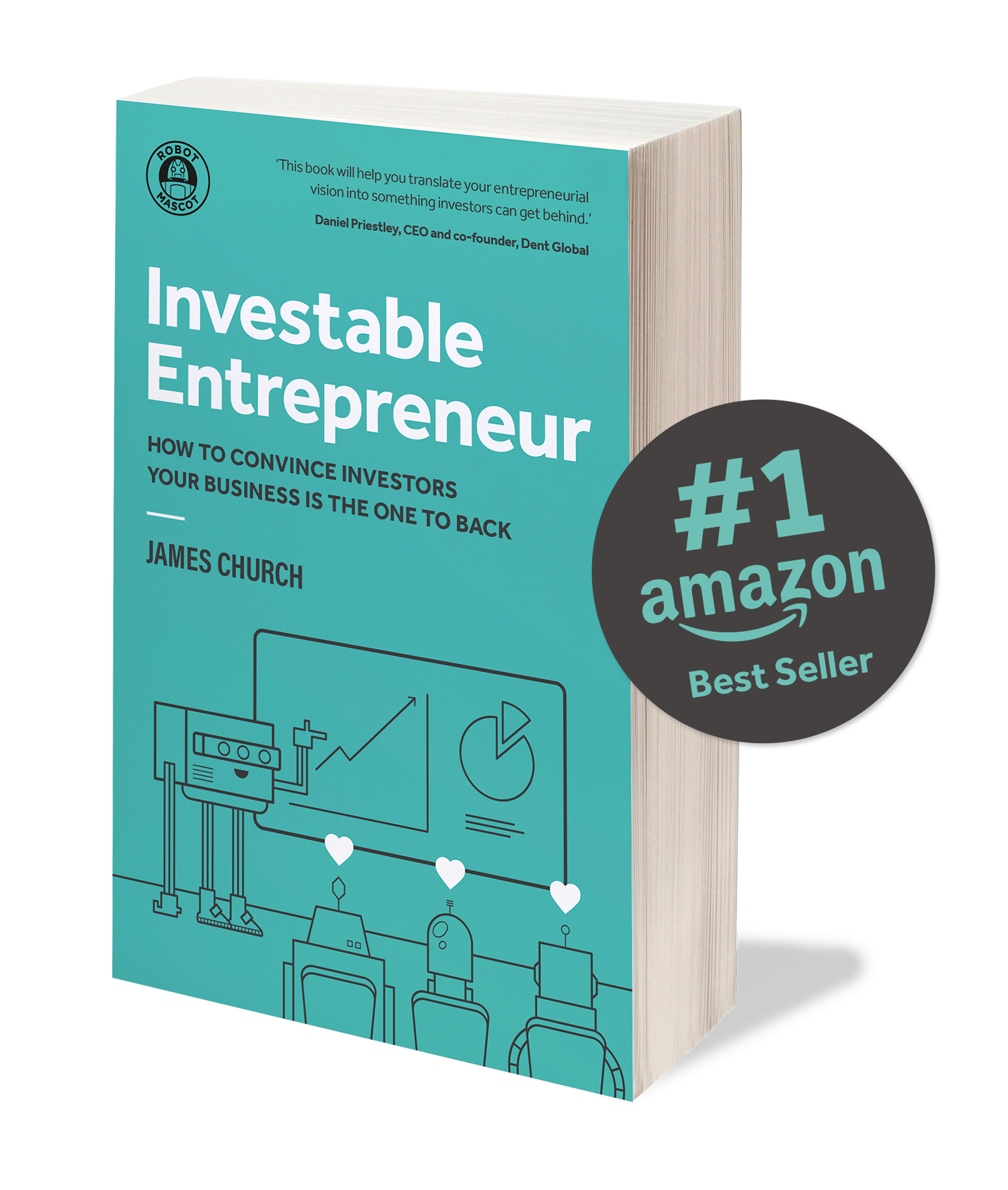
Claim your Free Copy of Investable Entrepreneur
Investable Entrepreneur takes you through our winning methodology – the process we use to increase our client’s chances of raising investment by more than 30x.
“This book will help you translate your entrepreneurial vision into something investors can get behind.”
Daniel Priestley, CEO and founder, Dent Global and four times best-selling business author
Recent Posts


Keep up to date with what we’re up to via email




Copyright ©Robot Mascot Ltd. All rights reserved.
